
Peaceful Protest Turns Violent in Noida
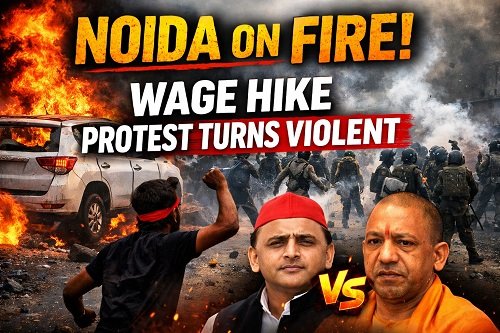
A workers’ protest demanding a wage hike in Noida, Uttar Pradesh, turned into a violent clash on April 13, 2026. What started as a peaceful gathering in the industrial areas quickly escalated, leaving streets filled with smoke, chaos, and fear. Several vehicles were set on fire, and incidents of stone pelting created panic among locals and commuters.
What Triggered the Workers’ Anger
The protest was not sudden. For weeks, workers had been expressing frustration over low wages and poor working conditions. With the cost of living rising steadily, many workers claimed that their salaries were no longer enough to meet basic needs. Daily expenses like food, rent, and transportation have increased, but wages have remained largely unchanged.
Scenes of Chaos: Vehicles Torched and Clashes Erupt
As tensions grew, a section of protesters turned aggressive. Vehicles parked in the area were torched, and property was vandalised. Eyewitnesses described how groups of workers blocked roads and threw stones, leading to clashes with security personnel. The situation quickly went out of control, turning the industrial zone into a conflict area.
Police Action and Situation Control
Police forces were deployed in large numbers to control the unrest. Authorities used measures like tear gas to disperse the crowd and prevent further violence. After several hours of tension, officials managed to bring the situation under control. However, the heavy police presence continued as a precaution to avoid any fresh outbreak.
Traffic Disruption and Public Impact
The protest caused massive disruption across Noida. Major roads were blocked, leading to long traffic jams. Office-goers were stuck for hours, and daily commuters faced serious inconvenience. Public transport services were also affected, showing how such incidents can disturb normal life in a busy city.
Core Demands: Wage Hike and Better Conditions
At the center of the protest were clear demands. Workers were asking for a wage hike, better working hours, and proper overtime pay. Many also raised concerns about job security and lack of basic workplace facilities. These issues have been ignored for a long time, which added to the anger.
Comparison with Neighboring States Fuels Frustration
One major reason behind the protest was the comparison with nearby Haryana. Workers pointed out that wages there have recently been increased, while in Noida they remain lower. This gap created a strong sense of inequality and pushed many workers to come out on the streets.
Political Reactions and Blame Game
The incident quickly turned political. Opposition leaders, including Akhilesh Yadav, blamed the government for ignoring workers’ problems. They argued that such violence is the result of continuous neglect of labor issues.
On the other side, the ruling Bharatiya Janata Party rejected these claims. Party leaders stated that while protests are a democratic right, violence cannot be accepted. They also suggested that some anti-social elements may have been involved in triggering the unrest.
Government’s Response and Justification
Government officials assured that strict action would be taken against those responsible for violence and vandalism. They emphasized maintaining law and order and promised to look into workers’ concerns. However, no immediate solution was announced, leaving many workers uncertain.
Larger Issue: Rising Worker Dissatisfaction in India
This incident is not just about Noida. It reflects a bigger issue across many industrial regions in India. Workers are facing increasing financial pressure due to inflation and stagnant wages. As industries grow, the gap between company profits and worker earnings is becoming more visible.
Need for Dialogue and Policy Intervention
Experts believe that such situations can be avoided through timely communication. Regular dialogue between workers, companies, and the government is necessary. Addressing wage concerns and improving working conditions can help prevent protests from turning violent.
What Happens Next?
The focus will now shift to investigations and possible legal action against those involved in the violence. At the same time, there may be discussions between worker representatives and authorities. Whether this leads to real change or not will depend on how seriously the issue is handled.
The Noida protest is a clear reminder that ignoring basic economic concerns can lead to serious consequences. Finding a balance between industrial growth and workers’ welfare is not just important—it is necessary for long-term stability.

Satyakam is a seasoned professional content writer with over 15 years of experience in creating high-quality, research-driven content for digital platforms. He specialises in business, finance, banking, law, technology, and informational blogs.