Former Indian Air Force Group Captain and Vir Chakra awardee Abhinandan Varthaman, one of India’s best-known fighter pilots, has started a new chapter in his aviation career. After nearly 22 years in the Indian Air Force (IAF), Varthaman took premature retirement and has now joined Goa-based regional airline FLY91 as a commercial pilot.
Varthaman left the Indian Air Force on March 31, 2026, according to officials familiar with the development. He subsequently joined FLY91 in August 2026 and is currently undergoing training before beginning regular commercial flying duties.
The transition is significant because Varthaman spent most of his professional career flying military aircraft and became a household name following the India-Pakistan aerial confrontation of February 2019.
Abhinandan Varthaman Joins FLY91
Varthaman has joined FLY91, a regional airline headquartered in Goa that focuses primarily on connecting smaller and underserved Indian cities.
He is reportedly undergoing type training on the ATR 72-600, the turboprop aircraft operated by FLY91. Type training is required before a pilot can operate a particular commercial aircraft. It includes aircraft-specific systems, operating procedures, simulator training and other regulatory requirements.
FLY91 has confirmed Varthaman’s association with the airline but has not disclosed detailed information about his position or future flying schedule, citing employee privacy.
The move also allows Varthaman to remain in the cockpit after leaving military service. Fighter pilots often move gradually toward command and administrative responsibilities as they reach senior ranks in the armed forces, while commercial aviation offers experienced pilots an opportunity to continue active flying.
Nearly 22 Years With the Indian Air Force
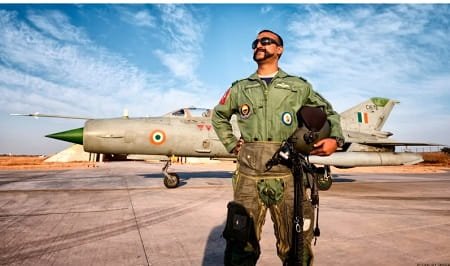
Abhinandan Varthaman joined the Indian Air Force in 2004 and built a career as a fighter pilot.
His name became known across India following the dramatic aerial confrontation between the Indian and Pakistani air forces on February 27, 2019, a day after Indian Mirage 2000 aircraft carried out strikes at Balakot in Pakistan.
Varthaman, who was then a Wing Commander, was flying a MiG-21 Bison when Indian aircraft were scrambled to respond to Pakistani fighter aircraft approaching the Line of Control.
According to the official Indian gallantry citation, Varthaman pursued a retreating Pakistani fighter and shot down an F-16 using his MiG-21’s missile. His own aircraft was subsequently hit, forcing him to eject across the Line of Control in Pakistan-administered territory.
Capture in Pakistan and Return to India
After ejecting from his aircraft, Varthaman landed on the Pakistani side of the Line of Control and was taken into custody.
Images and videos of the captured Indian pilot quickly attracted international attention as tensions between the two nuclear-armed neighbours rose sharply.
Pakistan later announced that Varthaman would be released as what then-prime minister Imran Khan described as a gesture of peace. He was handed back to Indian authorities at the Wagah-Attari border on March 1, 2019.
His conduct during captivity received widespread recognition in India. The official Vir Chakra citation praised his courage, resolve and dignity while in Pakistani custody.
Awarded the Vir Chakra
Varthaman was selected for the Vir Chakra, India’s third-highest wartime gallantry decoration, for his actions during the February 2019 aerial engagement.
The award was announced in 2019 and formally presented to him by then-President Ram Nath Kovind on November 22, 2021. By the time of the investiture ceremony, Varthaman had been promoted from Wing Commander to Group Captain.
His distinctive handlebar moustache and calm demeanour after the 2019 incident also made him one of the most recognisable officers of the Indian Air Force.
A New Career in Civil Aviation
Varthaman’s move from a MiG-21 fighter cockpit to an ATR 72-600 marks a very different phase of his flying career. Military fighter operations and commercial passenger aviation have different objectives and operating environments, but his extensive flying experience provides a strong foundation for the transition.
FLY91 itself is expanding rapidly in India’s regional aviation market. The airline currently operates ATR 72-600 turboprops and has announced major plans to increase its fleet and connect more smaller cities across the country. On September 3, 2026, the carrier announced a firm order for 40 additional ATR 72-600 aircraft as part of its expansion strategy.
For Abhinandan Varthaman, however, the development is more personal. After almost 22 years defending Indian airspace as an Air Force officer, the decorated fighter pilot will continue doing what has defined much of his professional life—flying, this time carrying civilian passengers rather than operating a combat aircraft.

Satyakam is a seasoned professional content writer with over 15 years of experience in creating high-quality, research-driven content for digital platforms. He specialises in business, finance, banking, law, technology, and informational blogs.