
In this blog, we explain how Money Recovery Lawyers protect the financial interests of individuals and businesses in India — what legal tools they use, how they prevent debtors from escaping liability, and why lawyer advice online is the fastest way to get qualified help when money is on the line.
There is a particular kind of financial damage that nobody really prepares for. Not the market going down. Not a bad quarter. The kind where someone – a client, a borrower, a business partner – simply decided your money was going to stay with them. And the longer you wait, the more it starts to feel like that might actually be how it ends.
Most people in this situation try everything informal first. Polite reminders. Firm messages. Third-party interventions. Some of those work. A lot of them do not – because a debtor who is not paying voluntarily has usually already calculated whether the person they owe money to is likely to do anything about it.
Money Recovery Lawyers change that calculation entirely. Not through aggression — through the legal system’s very specific, very real consequences for people who owe money and refuse to pay it. This blog explains how that protection actually works.
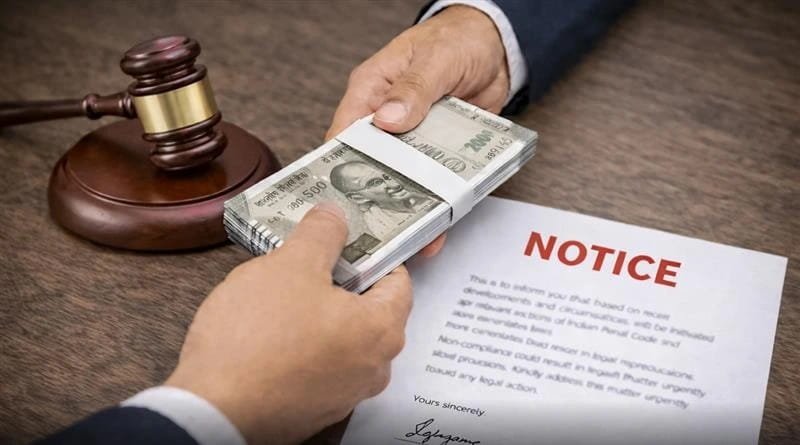
What “Protecting Financial Interests” Actually Means
It is worth being direct about what this phrase means in practice — because it covers more than just filing a case and hoping for the best. Protecting financial interests in a debt situation means three things simultaneously:
- First – preserving the legal options available before deadlines close them. India’s Limitation Act gives a three-year window for civil recovery suits from the date of default. Cheque bounce cases under Section 138 have a 30-day window for the legal notice from the bank memo. These windows do not pause while the creditor is trying informal resolution. Money Recovery Lawyers act quickly enough that options do not disappear through delay.
- Second – preventing the debtor from moving assets before a court can attach them. A debtor who suspects a case is coming has time to transfer property to family members, empty bank accounts, or dissolve businesses. Interim injunctions — court orders that freeze assets while proceedings are ongoing — are available but must be applied for while there is still something to freeze. Waiting until everything is gone makes this protection worthless.
- Third – building the case in a way that holds up in court. Evidence that is gathered and preserved properly, notices that are drafted with legal precision, complaints that are filed in the right forum — these are what turn a legitimate grievance into a legal claim that courts actually act on.
How Money Recovery Lawyers Protect You at Each Stage
The first thing any experienced Money Recovery Lawyer does is assess what is actually there:
Before Anything Is Filed
The first thing any experienced Money Recovery Lawyer does is assess what is actually there. Every document connected to the debt — written agreements, invoices, bank transfer records, messages acknowledging the amount, any communication where the debtor asked for more time — gets reviewed properly.
This assessment answers the questions that determine everything else. How strong is the evidence? Which legal route gives the best chance of actual recovery? Is the debtor trying to move assets? Does the situation justify applying for an interim injunction before the case even starts?
Getting lawyer advice online at this stage — before the first notice goes out — is what gives the case the strongest possible foundation. A case built on a clear strategy from day one is harder for the debtor to defeat than one assembled reactively after things have already gone wrong.
The Legal Notice Stage
A formal legal notice drafted by Money Recovery Lawyers is the first line of financial protection in most outstanding debt situations. It puts the debtor on formal notice of the exact amount owed, sets a specific deadline for payment, and makes clear what legal action follows if that deadline passes.
Two things happen at this stage that most creditors do not expect.
Many debtors pay. Not all of them — but enough that this step alone resolves a meaningful proportion of outstanding debt situations. The notice signals that the creditor is serious and the next step is a court case. For debtors who have been banking on the creditor doing nothing formal, this changes the calculation immediately.
For those who do not pay — the notice creates a documented record that becomes part of every subsequent legal proceeding. A court that sees a properly served legal notice that was ignored treats the situation differently from one where there is no evidence the debtor was ever formally asked.
Protecting Against Asset Transfers
This is the protection most creditors only think about after it is too late.
- A debtor who knows a case is coming — or suspects one — can transfer property to relatives, move funds offshore, dissolve operating companies, or structure transactions designed to make recovery impossible by the time a decree is obtained. The law has remedies for this. But those remedies require acting before the assets are moved, not after.
- Money Recovery Lawyers apply for interim injunctions under Order 39 of the CPC when there is evidence — or credible reason to believe — that the debtor is moving assets. These injunctions freeze specific assets while the case proceeds. A debtor who tries to transfer injuncted assets violates a court order, which is treated as contempt — a serious matter courts address firmly.
- For creditors with significant claims against debtors who show signs of asset movement — unusual property transfers, sudden business closures, large unexplained withdrawals — this protection is one of the most valuable things Money Recovery Lawyers can provide. And it only works when acted on early.
Court Proceedings and Enforcement
Once a case is filed, Money Recovery Lawyers represent the creditor’s interests through every stage — responding to the debtor’s defences, presenting evidence, making legal arguments, and keeping the matter moving through the adjournments and delays that are a routine part of Indian litigation.
The Supreme Court has been clear in multiple rulings that weak or baseless defences raised by debtors cannot delay recovery where creditors have provided sufficient evidence of the debt. Experienced Money Recovery Lawyers know how to present evidence in a way that courts recognise as substantive – and how to counter the standard tactics debtors use to stretch proceedings beyond what is necessary.
Once a decree is obtained, enforcement through execution proceedings gives legal authority to attach bank accounts, movable assets, and immovable property. A decree that sits unexecuted is a piece of paper. Money Recovery Lawyers who handle execution know where to look for assets and what applications accelerate the process from decree to actual payment.
The Situations Where Financial Protection Matters Most
There are specific situations where having Money Recovery Lawyers involved makes the biggest practical difference to the outcome:
- When the debtor is showing signs of asset movement – unusual financial activity, sudden property transfers, business restructuring – acting immediately through an injunction application is what preserves recovery options before they disappear.
- When the amount involved is significant – above Rs. 5 to 10 lakh – the cost-benefit of professional legal help becomes clear. The cost of experienced Money Recovery Lawyers is a fraction of what is at stake, and the strategic difference between a well-handled case and a poorly handled one can be the difference between recovery and writing the amount off.
- When the debtor is a company – particularly one showing signs of financial stress — the IBC route under Section 9 for amounts above Rs. 1 crore creates insolvency pressure that few other mechanisms can match. A company facing insolvency proceedings has strong motivation to settle outstanding debts rather than face the consequences of formal insolvency resolution.
- When a cheque has bounced – criminal liability under Section 138 runs alongside the civil case. The prospect of imprisonment and fines creates pressure that a civil suit alone does not.
Why Lawyer Advice Online Is the Fastest Starting Point
Financial situations involving outstanding debts tend to be stressful in a very specific way. The creditor knows the money is owed. The evidence exists. But the path from knowing that to actually recovering the money is unclear — and every week of uncertainty is a week the debtor has to prepare defences or move assets.
Lawyer advice online removes the delay from that transition. An experienced Money Recovery Lawyer can be reached the same day a creditor decides to take formal action — documents can be shared digitally, the situation can be assessed properly, and the first protective steps can be taken before more time passes.
For people outside major cities, where finding specialist legal help has historically been difficult, this access matters even more. Lawyer advice online means the quality of legal protection available does not depend on geography.
Why Choose Vakilsearch
Vakilsearch connects individuals and businesses with experienced Money Recovery Lawyers who understand both the legal tools available and the practical realities of recovering money from debtors who have decided not to pay. From interim injunctions to legal notices, civil suits, cheque bounce complaints, and IBC proceedings — every engagement begins with a proper case assessment through lawyer advice online that is accessible from wherever you are, without delays that cost you time and options.
FAQs
Q: How do Money Recovery Lawyers protect financial interests before a court case begins?
A: Before any filing happens, Money Recovery Lawyers assess the full picture — reviewing documents, identifying which legal routes apply, and determining whether the debtor is showing signs of asset movement. Where evidence suggests assets may be transferred, they apply for interim injunctions that freeze those assets while proceedings are ongoing. This pre-filing protection is one of the most valuable things Money Recovery Lawyers provide — because once assets are moved, recovering against them becomes significantly harder regardless of how strong the underlying case is.
Q: What is an interim injunction and when does it protect a creditor’s financial interests?
A: An interim injunction under Order 39 of the CPC is a court order that prevents the debtor from dealing with, transferring, or encumbering specific assets while a recovery case is pending. It is applied for when there is credible evidence that the debtor is attempting to move assets to defeat the creditor’s claim. Getting lawyer advice online immediately when signs of asset movement appear — unusual property transfers, sudden business changes, large unexplained withdrawals — is what makes this protection effective. Applied too late, after assets have already moved, it loses most of its practical value.
Q: Can Money Recovery Lawyers help even if the debt is not backed by a written agreement?
A: Yes — though the strength of the case depends heavily on what evidence exists. Even without a formal contract, courts have enforced debts supported by bank transfer records, acknowledgement messages, emails, WhatsApp conversations, and witness testimony. The Supreme Court has ruled that informal agreements or promissory notes may be enforceable where sufficient evidence of the debt exists. Money Recovery Lawyers assess what evidence is available and advise on the realistic strength of the case — which is exactly why getting lawyer advice online early, before evidence disappears, matters so much.
Q: What happens after a court decree is obtained — does payment happen automatically?
A: No. A court decree in your favour is the legal authority to recover — not the recovery itself. If the debtor does not pay voluntarily after the decree, execution proceedings must be initiated. These allow attachment of bank accounts, movable property, and immovable assets to enforce payment. Money Recovery Lawyers who handle execution proceedings know where to look for assets and which applications move the process from decree to actual payment most efficiently. The decree is a powerful instrument — but only when it is actively enforced through the right legal steps.

Santosh Kumar is a Professional SEO and Blogger, With the help of this blog he is trying to share top 10 lists, facts, entertainment news from India and all around the world.