A tense moment unfolded in the IPL 2026 clash at Delhi when Lungi Ngidi suffered a frightening head injury on the field. What started as a routine fielding effort quickly turned into a medical emergency, forcing officials to pause the match and rush him to the hospital under special arrangements. Here’s a complete, clear look at what happened, how authorities responded, and what his condition is now.
The Incident: A Sudden and Scary Fall
The incident took place during the match between Delhi Capitals and Punjab Kings at the Arun Jaitley Stadium.
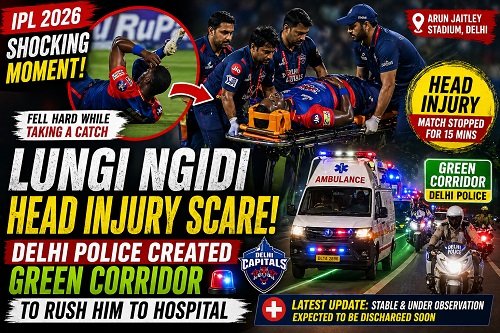
Ngidi was attempting a catch when he lost balance and fell backward. Instead of landing safely, the back of his head hit the ground hard. The impact was clearly severe. Within seconds, players nearby signaled for medical help as Ngidi remained down, holding his head and showing minimal movement.
The stadium atmosphere changed instantly. What had been a competitive, energetic match turned silent and tense. Teammates and opponents stood around in concern while the medical team rushed in.
Immediate Medical Response on the Field
The on-field medical staff reacted quickly. They assessed Ngidi’s condition, stabilized his head and neck, and avoided unnecessary movement — a crucial step in suspected head or spinal injuries.
After initial checks, it was clear that he needed urgent hospital evaluation. A stretcher was brought in, and Ngidi was carefully taken off the field. The match was halted for several minutes as everyone focused on the player’s safety.
This quick response reflects how seriously modern cricket treats head injuries, especially after past incidents where delayed action led to complications.
Delhi Police Steps In: The Green Corridor
One of the most critical parts of this incident was the rapid coordination outside the stadium.
Delhi Police created a green corridor — a special traffic-free route — to ensure that the ambulance carrying Ngidi could reach the hospital without any delay.
In a city like Delhi, where traffic congestion can slow down emergency services, this decision made a huge difference. The route was cleared in advance, signals were managed, and traffic was temporarily controlled so the ambulance could move at maximum speed.
This kind of coordination is usually seen in life-threatening situations, and it shows how seriously the authorities treated the injury.
Hospital Update: Current Condition
After being taken to the hospital, Ngidi underwent medical evaluation for head trauma.
The latest updates are reassuring:
- He is reported to be stable
- He remained conscious during transport and evaluation
- He complained of headache and neck pain, which are common after such impacts
- Doctors have kept him under observation to rule out concussion or internal injury
There is no immediate indication of life-threatening damage, but medical teams are taking a cautious approach. In cases of head injury, symptoms can sometimes appear later, which is why monitoring is essential.
What Happened to the Match?
The match was paused for around 10–15 minutes as medical teams attended to Ngidi.
After he was taken off the field, play resumed. As per cricket rules, he was replaced by a concussion substitute, ensuring the team was not unfairly disadvantaged.
Despite the disruption, the game continued to its conclusion, with Delhi Capitals eventually losing the match. However, the result became secondary, as the focus remained on Ngidi’s health.
Why Head Injuries in Cricket Are Taken So Seriously
Cricket may not always look like a high-contact sport, but head injuries can be extremely dangerous.
A fall like Ngidi’s can lead to:
- Concussion
- Neck strain or spinal injury
- Internal bleeding (in rare cases)
Even if a player seems fine initially, symptoms like dizziness, confusion, or delayed pain can appear hours later. That’s why modern protocols are strict:
- Immediate removal from play
- Detailed medical checks
- Gradual return only after clearance
Over the years, cricket boards have improved safety standards, including concussion substitutes and stricter medical monitoring.
A Broader Look: Emergency Preparedness in Sports
This incident also highlighted how well different systems worked together:
- On-field medical teamacted instantly
- Match officialsprioritized player safety over the game
- Delhi Policeensured rapid hospital access
Such coordination is not always visible, but it plays a crucial role in preventing serious outcomes.
Final Situation Right Now
As things stand:
- Lungi Ngidi is stable and recovering
- He is under medical observation
- Further updates will depend on scans and doctor evaluations
- There is no confirmed timeline yetfor his return to cricket
For now, the focus is on his recovery rather than the sport.
Closing Note
Moments like these remind everyone that behind the competition and excitement, player safety comes first. What could have turned into a much more serious situation was handled quickly and efficiently — from the field to the hospital.
The good news is that Ngidi is stable, and early signs are positive. Fans, teammates, and officials will now wait for a full medical update, hoping to see him back on the field soon — but only when it’s completely safe.

Satyakam is a seasoned professional content writer with over 15 years of experience in creating high-quality, research-driven content for digital platforms. He specialises in business, finance, banking, law, technology, and informational blogs.