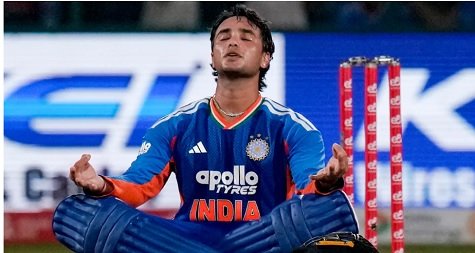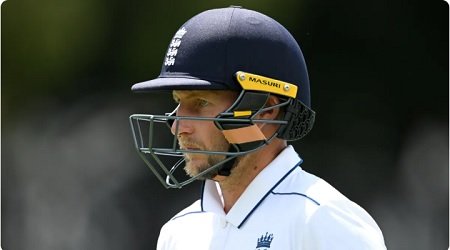
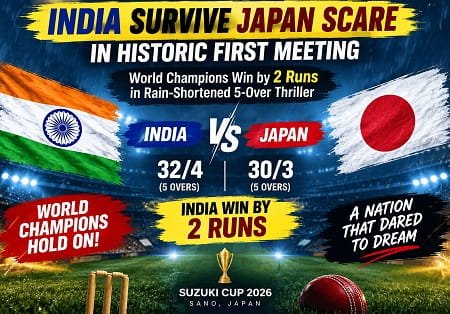
India survived an extraordinary scare from Japan before winning their historic first-ever men’s T20 International meeting by just two runs at the Sano International Cricket Ground on Tuesday, September 22, 2026.
What was expected to be a comfortable outing for the reigning T20 world champions turned into a last-ball thriller after rain reduced the one-off Suzuki Cup encounter to only five overs per side. India struggled badly with the bat and managed just 32/4, before their spinners held Japan to 30/3.
The result gave India the trophy, but Japan walked away with enormous credit after pushing one of world cricket’s strongest teams to the final delivery.
Rain Turns Historic India-Japan Clash Into Five-Over Shootout
Heavy rain and a wet outfield delayed the start in Sano and eventually forced officials to reduce the scheduled T20 International to a five-over-a-side contest.
The conditions had already affected preparations, with heavy rain forcing training to be cancelled on Monday. The damp surface offered significant assistance to the spinners, while the slow outfield made boundary hitting difficult.
Indian captain Shreyas Iyer won the toss and elected to bat, but the decision quickly came under pressure.
Japan Spinners Stun India’s Batting Line-Up
Japan showed no signs of being intimidated by India’s star-studded batting order.
Seventeen-year-old left-arm spinner Charlie Hara-Hinze provided the perfect start when he dismissed dangerous opener Abhishek Sharma for a golden duck. Sanju Samson also struggled to accelerate, while Ishan Kishan made only three before falling to Benjamin Ito-Davis.
Captain Shreyas Iyer was the only Indian batter to reach double figures. He battled his way to 16 from 12 balls, helping India reach 32/4 from their five overs. Hara-Hinze finished with impressive figures of 2/17, while Japan’s slow bowlers made excellent use of the turning pitch.
India managed only three boundaries in the entire innings, illustrating just how difficult stroke-making had become.
Japan Take India to the Final Over
A target of 33 suddenly looked achievable, and Japan approached the chase without fear.
India surprisingly used spin throughout the innings rather than turning to their fast bowlers. Axar Patel began economically, but Ravi Bishnoi conceded 10 runs in the third over, allowing Japan to stay firmly in the contest.
Japan captain Kendel Kadowaki-Fleming played a crucial innings of 12 from 12 balls. Washington Sundar then struck twice and finished with 2/13, but Japan reached 25/3 after four overs.
That left the hosts needing only eight runs from the final six balls to complete one of the biggest upsets in T20I cricket.
Axar Patel Holds His Nerve in Dramatic Final Over
With the match on the line, Iyer turned to Axar Patel.
Axar conceded no run from the first delivery and only a single from the second. The biggest talking point arrived shortly afterwards when a delivery to Alexander Shirai-Patmore was initially called wide. India protested, the two umpires discussed the decision and the wide call was eventually reversed.
The decision added further drama to an already tense finish.
Japan continued to collect singles but could not find the boundary they desperately needed. With four required from the final delivery, Shirai-Patmore managed only one run, leaving Japan at 30/3 and handing India a nerve-racking two-run victory. Axar finished the match having conceded only seven runs from his two overs.
Historic Day for India and Japanese Cricket
The Suzuki Cup carried significance beyond the result. It was the first senior men’s international cricket match between India and Japan, as well as Japan’s first T20I against a full ICC member. The fixture was organised as part of events connected with 75 years of diplomatic relations between the two countries.
The victory also took India to 200 wins in men’s T20 Internationals, including Super Over victories, making them the first team to reach the landmark.
For Japan, however, the narrow defeat may be remembered almost like a breakthrough result. Ranked well below India and facing the world champions for the first time, they showed that they could compete under pressure.
Both teams now turn their attention to the 2026 Asian Games, but the historic afternoon in Sano will be remembered for a long time — particularly by an Indian side that came within one boundary of suffering a remarkable upset.

Satyakam is a seasoned professional content writer with over 15 years of experience in creating high-quality, research-driven content for digital platforms. He specialises in business, finance, banking, law, technology, and informational blogs.