Abhishek Sharma’s 35-Ball Century Powers India to Six-Wicket Win Over New Zealand in 3rd T20I
India chased 199 in just 13.2 overs in Wellington on October 27, 2026, sealing the five-match series with two games remaining.
| Match | New Zealand vs India, 3rd T20I |
| Venue and date | Hnry Stadium, Wellington | October 27, 2026 |
| New Zealand | 198/3 (20 overs) |
| India | 199/4 (13.2 overs) |
| Result | India won by six wickets; series 3-0 |
| Player of the Match | Abhishek Sharma — 113 (38 balls) |
A target of 199 usually demands a calculated chase in Twenty20 cricket. India turned it into an exhibition of fearless hitting in Wellington on Tuesday, October 27, as Abhishek Sharma smashed 113 off just 38 deliveries to secure a stunning six-wicket victory over New Zealand in the third T20 International. The left-handed opener reached his century in 35 balls, and India completed the chase in only 13.2 overs, with 40 deliveries to spare.
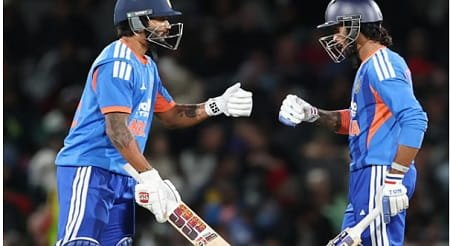
The victory gave India an unassailable 3-0 advantage in the five-match series. Fifteen-year-old Vaibhav Sooryavanshi supplied an equally aggressive start with 45 from 19 balls, while the opening pair’s 133-run partnership left New Zealand little chance of defending what had initially looked a competitive total. The two openers propelled India to 118 without loss in the first six overs, a record powerplay total in men’s T20 internationals.

New Zealand Post 198/3 as Daryl Mitchell Anchors the Innings
India captain Shreyas Iyer won the toss and chose to field at Hnry Stadium. The decision brought an early breakthrough when Arshdeep Singh dismissed Tim Seifert for two, leaving New Zealand 4/1 in the second over. Finn Allen responded with a powerful counterattack, hitting five sixes in his 40 off 25 balls. Alongside Daryl Mitchell, he added 86 runs for the second wicket and pushed the hosts towards a substantial total.
Nitish Kumar Reddy ended Allen’s innings, and Axar Patel removed Glenn Phillips for 17. At 123/3 after 12 overs, New Zealand needed a strong finish. Mitchell delivered it, remaining unbeaten on 89 from 52 balls with five fours and five sixes. Bevon Jacobs joined him in an unbroken 75-run partnership and finished 39 not out from 23 deliveries. Their late acceleration carried New Zealand to 198/3 in 20 overs.
Arshdeep was India’s most economical wicket-taker, returning 1/33 from four overs. Axar took 1/36 and Nitish 1/38, while Bhuvneshwar Kumar finished wicketless with 0/40. New Zealand had scored at almost 10 an over, but their total was soon overshadowed by an extraordinary response.
India’s Opening Pair Tear Into New Zealand’s Bowling
The chase took a dramatic turn from the opening over. Jacob Duffy conceded 26 runs as Abhishek and Sooryavanshi attacked immediately rather than settling in. India reached 43 without loss after two overs, 64 after three and 100 by the end of the fifth. Shots cleared the boundary on both sides of the ground, while even good-length deliveries offered little protection to the bowlers.
Abhishek reached his half-century in only 15 balls. Sooryavanshi, promoted to open after batting at No. 3 in the previous match, matched the intent with four fours and four sixes. The pair raced to 118/0 at the end of the powerplay, eclipsing the previous men’s T20I powerplay record of 116. They eventually added 133 for the first wicket before Matthew Fisher dismissed Sooryavanshi in the eighth over. The teenager’s 45 came at a strike rate of 236.84.
Abhishek Sharma Reaches Fourth T20I Century in 35 Balls
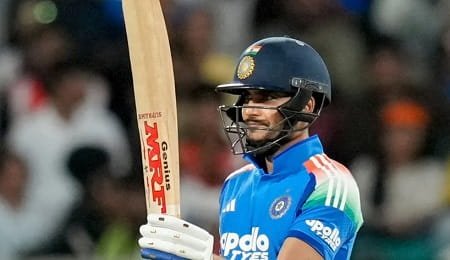
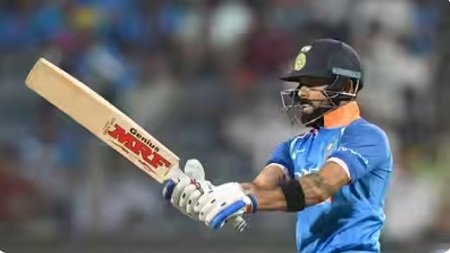
The dismissal did nothing to slow Abhishek. He continued attacking the pace bowlers, moving from 80 off 25 balls to a century from 35. A dropped chance shortly before the milestone gave him a reprieve, but most of the innings was a display of clean timing and confident strokeplay. His hundred arrived against Kyle Jamieson, and he celebrated before resuming the assault.
Abhishek eventually fell to Jamieson in the tenth over, caught by Glenn Phillips for 113. He struck nine fours and 11 sixes and scored at a remarkable strike rate of 297.37. It was his fourth T20I century, another major addition to his rapidly growing record in the shortest international format.
By the time he departed, India were 178/2 and required only 21 more runs. The opening stand had not merely given India a strong start; it had effectively settled the contest inside the first half of the chase.
Late Wickets Cannot Prevent India’s Series-Clinching Win
New Zealand did find some success after Abhishek’s dismissal. Mitchell Santner removed captain Shreyas Iyer for five, and Jamieson bowled Sanju Samson for 18. Santner’s 1/17 from three overs was notably economical in a match dominated by India’s batters, while Jamieson finished with 2/45.
However, there was no realistic way back with so few runs needed. Tilak Varma remained unbeaten on one, and Naman Dhir struck a boundary off Jamieson to finish the chase at 199/4 in 13.2 overs. India won by six wickets and secured the series with two matches still to play. Abhishek was named Player of the Match.
Records and Standout Numbers From the 3rd T20I
India’s batting performance produced several remarkable milestones:
- India’s 118/0 was the highest powerplay total recorded in men’s T20 internationals.
- The opening pair added 133 runs in only 43 legal deliveries.
- Abhishek completed his fourth T20I century in 35 balls and finished on 113 from 38.
- India reached 100 runs in five overs and completed the 199-run target with 40 balls unused.
- According to the ICC, it was the second-quickest successful chase of a target of at least 190 in men’s T20Is, measured by balls remaining.
What the Captains Said After the Match
India captain Shreyas Iyer praised the opening combination and admitted that reaching 100 in five overs was something he had not previously witnessed at international level. He also credited India’s bowlers for restricting New Zealand to fewer than 200 despite the hosts’ strong batting contributions.
New Zealand skipper Mitchell Santner acknowledged the difficulty of containing India’s attacking batters once they got going. Daryl Mitchell, whose unbeaten 89 had given the home side a chance, also praised Abhishek’s clean hitting. The result reflected not a poor New Zealand total, but the exceptional speed at which India dismantled the chase.
What Comes Next in the India-New Zealand T20I Series?
India entered the Wellington encounter already leading 2-0 after victories in Christchurch on October 22 and 24. Tuesday’s result settled the series before the final two fixtures. The fourth T20I is scheduled for Friday, October 30, at Eden Park in Auckland, followed by the fifth in Hamilton on November 1.
New Zealand will be looking for a response after three straight defeats, particularly from a bowling attack that struggled to control the new ball in Wellington. For India, the remaining games offer a chance to extend a winning run built on attacking batting and the growing confidence of its younger players.

Satyakam is a seasoned professional content writer with over 15 years of experience in creating high-quality, research-driven content for digital platforms. He specialises in business, finance, banking, law, technology, and informational blogs.