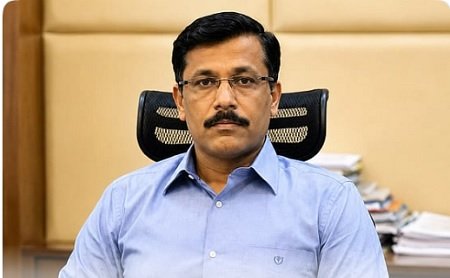
A massive protest led by the Cockroach Janta Party (CJP) took place at Delhi’s Jantar Mantar on Saturday, June 6, 2026. What began as an online youth movement turned into one of the biggest student-led public demonstrations seen in recent months. Thousands of students, exam aspirants, and young supporters gathered demanding accountability over exam controversies and calling for the resignation of Union Education Minister Dharmendra Pradhan.
The protest was led by CJP founder Abhijeet Dipke, who arrived in India from the United States earlier in the day amid heavy police security and growing political attention.
How the Protest Started
The movement had been building online for weeks. CJP gained popularity mainly among students frustrated with alleged exam paper leaks, recruitment delays, grading errors, and rising unemployment concerns. The group became especially active after several competitive exam controversies triggered anger across social media platforms.
Abhijeet Dipke had announced earlier this week that he would return to India on June 6 and lead a peaceful protest at Jantar Mantar. In videos shared online, he appealed to students and young people to gather peacefully and raise their voices “within the Constitution.”
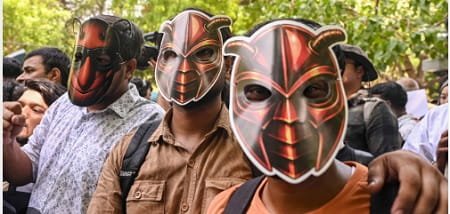
By Saturday morning, crowds had already started gathering near Jantar Mantar carrying placards, flowers, banners, and symbolic cockroach masks — a symbol that the movement says represents survival and resistance.
Heavy Security Across Central Delhi
Delhi Police deployed heavy security around Jantar Mantar and nearby areas. Barricades were placed on several roads, and additional police and paramilitary personnel were stationed to maintain order.
Authorities had reportedly granted permission for the demonstration from 10 AM to 5 PM as a “one-time exception.” Traffic advisories were also issued in parts of central Delhi due to the expected crowd.
Despite concerns of tension or clashes, the protest remained mostly peaceful throughout the day. Protesters repeatedly raised slogans demanding accountability in the education system and justice for students affected by alleged irregularities.
What Were the Main Demands?
The central demand of the protest was the resignation of Education Minister Dharmendra Pradhan.
According to CJP supporters, repeated controversies surrounding examinations and recruitment systems have damaged the future of millions of students. Protesters accused the government of failing to ensure transparency and fairness in competitive exams.
Many students at the protest said they were frustrated by paper leak allegations, delayed recruitment results, and uncertainty around career opportunities. Several participants also linked the issue to broader concerns like unemployment and rising living costs.
During his speech, Abhijeet Dipke said the movement was not against democracy or the Constitution but was demanding accountability from elected leaders.
He reportedly told supporters that “the youth are no longer scared” and claimed that attempts to silence the movement online would not stop public anger.
Abhijeet Dipke’s Arrival Draws Attention
Dipke’s return to India became one of the most talked-about parts of the protest. Supporters gathered near the airport and later joined him at Jantar Mantar.
The 30-year-old activist from Maharashtra studied journalism in Pune before moving to the United States for higher education. Reports say he recently completed a master’s degree in Public Relations from Boston University.
His movement, which grew rapidly on Instagram and other platforms, has reportedly crossed millions of followers in just a few weeks. The protest marked the first major street demonstration by the organization after its massive online rise.
At the protest site, Dipke addressed the crowd and said he was prepared to continue the movement nationwide if the government ignored student concerns.
Support From Activists and Opposition Leaders
The protest also received support from several activists and opposition figures.
Climate activist Sonam Wangchuk arrived at Jantar Mantar during the demonstration and praised the participation of young people. He reportedly described the gathering as proof that democratic voices were still alive in the country.
Political leaders including Uddhav Thackeray and some opposition members publicly backed the protest and urged the government not to ignore youth anger.
However, the ruling BJP dismissed the movement as exaggerated social media activism and questioned its political intentions.
Symbolism and Atmosphere at the Protest
One of the most unusual aspects of the protest was its symbolic style. Many participants wore cockroach masks, carried flowers, and used satire to criticize the system.
Instead of aggressive demonstrations, organizers repeatedly appealed for peaceful conduct. Videos from the protest showed students chanting slogans, singing songs, and holding handwritten posters about education and unemployment.
Some protesters said the movement represented students who feel ignored despite years of preparation for competitive exams.
By evening, the crowd began dispersing peacefully under police supervision.
What Happens Next?
Before ending the protest, CJP leaders reportedly gave the government a seven-day deadline regarding their demands. Abhijeet Dipke warned that if no action was taken, the movement could expand into larger nationwide demonstrations in the coming weeks.
The protest has already sparked strong reactions online and may become an important political issue among young voters and students.
Whether the movement continues to grow or fades after the initial momentum remains to be seen. But Saturday’s gathering at Jantar Mantar clearly showed that frustration among students and job aspirants has turned into a visible public movement.

Satyakam is a seasoned professional content writer with over 15 years of experience in creating high-quality, research-driven content for digital platforms. He specialises in business, finance, banking, law, technology, and informational blogs.