
Dams have long been hailed as symbols of human engineering and progress. From the Bhakra Nangal Dam in India to the Hoover Dam in the United States and the Three Gorges Dam in China, these massive structures represent mankind’s effort to control rivers, harness water, and generate power.
As of 2025, there are more than 58,700 large dams worldwide (International Commission on Large Dams – ICOLD, 2024), and India alone has over 5,700 dams, making it the third-largest dam-owning nation after China and the United States. Dams play a vital role in agriculture, energy, water supply, and flood management. However, they also carry social, environmental, and economic costs that spark debate globally.
Lets explore the advantages and disadvantages of dams:
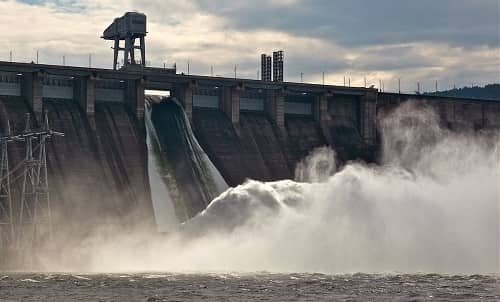
Advantages of Dams
1) Water Storage and Supply
One of the biggest benefits of dams is water storage. They act as artificial reservoirs that store water for multiple uses such as:
- Drinking water for urban populations.
- Irrigation for agriculture.
- Industrial use for factories and power plants.
For example, the Sardar Sarovar Dam in Gujarat provides water to more than 9,000 villages and 131 towns, transforming drought-prone areas into productive farmland.
2) Irrigation Benefits
Agriculture is the backbone of countries like India, where over 40% of the workforce depends on farming. Dams allow controlled irrigation by channeling stored water into canals and fields. According to India’s Ministry of Jal Shakti (2024), major and medium dams contribute to irrigating more than 17% of India’s total agricultural land, ensuring food security.
3) Hydroelectric Power Generation
Hydropower is a clean and renewable source of energy, and dams make it possible. The Tehri Dam in Uttarakhand, for instance, generates over 1,000 MW of electricity, reducing dependence on coal and fossil fuels. Globally, hydropower provides around 16% of total electricity generation (International Energy Agency, 2024).
4) Flood Control
Dams help regulate river flow and control flooding. By storing excess water during heavy rainfall and releasing it gradually, they prevent damage to downstream settlements. The Hirakud Dam in Odisha has successfully controlled recurring floods in the Mahanadi basin for decades.
5) Tourism and Recreation
Many dams have become popular tourist destinations. Activities like boating, fishing, and sightseeing around reservoirs boost local economies. For example, the Bhakra Nangal Dam attracts thousands of tourists annually, generating additional revenue for the region.
6) Employment and Infrastructure Development
Dam construction projects provide large-scale employment opportunities for engineers, laborers, and local communities. They also improve infrastructure like roads, bridges, and townships in surrounding areas.
7) Inland Navigation
Reservoirs created by dams can support inland waterways and navigation, making transportation of goods more efficient. While India has underutilized this potential, countries like China have effectively used dams for water-based transport.
Disadvantages of Dams
While dams have undeniable benefits, they also come with serious drawbacks.
1) Displacement of People
One of the biggest criticisms of dams is the large-scale displacement of communities. Millions of people worldwide have been forced to leave their homes due to dam projects. In India, the Narmada Bachao Andolan highlighted the struggles of people displaced by the Sardar Sarovar Dam, many of whom lost not only their homes but also their livelihood.
2) Environmental Damage
Dams alter natural ecosystems. They submerge forests, disrupt wildlife habitats, and change river ecology. The World Wildlife Fund (WWF, 2024) notes that nearly one-third of freshwater fish species are threatened by dam-related habitat changes. In India, the construction of the Tehri Dam submerged entire villages and forest areas, permanently altering the Himalayan ecosystem.
3) High Construction and Maintenance Costs
Building large dams requires massive investments running into billions of dollars. For instance, China’s Three Gorges Dam cost over $30 billion. In many cases, the financial burden outweighs the benefits, especially in developing nations where maintenance funds are limited.
4) Risk of Dam Failure
Dam failures, though rare, can be catastrophic. In 1979, the Machchu Dam in Gujarat collapsed, killing more than 2,000 people. Climate change, increasing rainfall variability, and aging infrastructure make dam safety a major concern in 2025.
5) Sedimentation Problem
Over time, rivers deposit silt in dam reservoirs, reducing storage capacity and efficiency. According to India’s Central Water Commission (2024), many reservoirs in India have already lost 20–30% of their original storage capacity due to sedimentation.
6) Impact on Downstream Communities
Dams disrupt the natural flow of rivers, reducing water supply to downstream regions. Farmers, fishermen, and villages located downstream often face water scarcity. For example, downstream areas of the Krishna River basin have experienced water stress after the construction of several upstream dams.
7) Social Conflicts
Large-scale dam projects often trigger social unrest and conflicts between states or regions over water-sharing. For instance, disputes between Karnataka and Tamil Nadu over the Cauvery River highlight how dams can intensify political and regional tensions.
8) Contribution to Climate Change
While hydroelectric dams are considered renewable, recent research (IPCC 2024) suggests that reservoirs can emit significant amounts of methane, a greenhouse gas, due to decaying organic matter under water. This challenges the claim that dams are entirely “green.”
Dams in India: The 2025 Picture
- Total dams: Over 5,700 completed and about 300 under construction.
- Largest dams: Bhakra Nangal, Sardar Sarovar, Hirakud, and Tehri.
- Hydropower share: About 12% of India’s electricity generation comes from hydropower.
- Concerns: Aging infrastructure (many dams are 40–50 years old), displacement, and environmental challenges.
Global Perspective
- China leads with over 23,000 large dams, including the Three Gorges Dam, the world’s largest hydroelectric project.
- USA has more than 9,200 large dams, many built during the 20th century.
- Africa is rapidly increasing dam construction to meet water and energy needs, but faces concerns about environmental damage (e.g., Ethiopia’s Grand Renaissance Dam).
Balancing the Pros and Cons
Experts suggest a balanced approach to dam construction and management:
- Smaller, eco-friendly dams instead of massive projects.
- Proper rehabilitation of displaced communities.
- Sediment management techniques to prolong reservoir life.
- Renewable energy alternatives (solar, wind) to reduce reliance on large hydropower dams.
- International cooperation for transboundary rivers to avoid conflicts.
Conclusion
Dams are both boons and banes of modern civilization. Their advantages — water supply, irrigation, power generation, and flood control — are undeniable. Yet their disadvantages — displacement, environmental loss, high costs, and safety risks — make them controversial.
As of 2025, the debate over dams is not whether they should exist, but how they should be planned and managed. With climate change, rising populations, and growing water scarcity, dams will continue to play a crucial role. But for them to truly serve humanity, they must be built and operated with a balance of development, environment, and social justice.

Santosh Kumar is a Professional SEO and Blogger, With the help of this blog he is trying to share top 10 lists, facts, entertainment news from India and all around the world.