
With the NEET UG 2026 exam just days away, the National Testing Agency has issued a clear set of guidelines to ensure that candidates face no unnecessary trouble on exam day. These instructions, released through a public notice on April 30, 2026, focus mainly on dress code, allowed items, and entry procedures at exam centres.
Every year, many students lose valuable time or face stress due to avoidable mistakes—wrong clothing, carrying restricted items, or arriving late. This time, the agency has tried to make things simple and direct so candidates can focus only on their performance.
Clear Dress Code to Avoid Delays
The dress code for NEET UG 2026 is strict but practical. Candidates are advised to wear light, simple clothes. Half-sleeve shirts or T-shirts are preferred, as full sleeves may lead to extra checking and delays. Heavy clothing, layered outfits, or garments with large buttons and embroidery should be avoided completely.
Footwear is another important point. Candidates should wear slippers or sandals with low heels. Shoes, especially those with thick soles, are generally not allowed as they may slow down the frisking process.
For female candidates, it is recommended to avoid accessories like scarves with pins, heavy dupattas, or decorative dresses. The focus should be on comfort and simplicity rather than style.
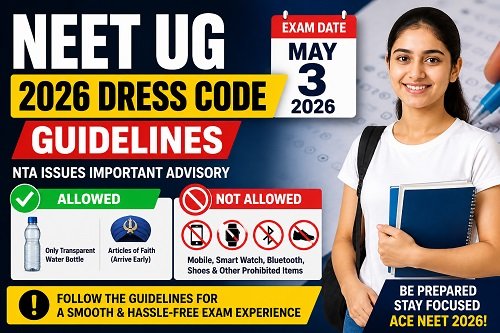
What You Can and Cannot Carry
The agency has made it very clear that candidates should carry only essential items. One important instruction is that only transparent water bottles are allowed inside the exam hall. This rule helps maintain security while ensuring students stay hydrated.
Apart from that, candidates must bring:
- Admit card
- Valid ID proof
- Passport-size photograph (if required)
At the same time, several items are strictly banned. These include:
- Mobile phones
- Smart watches
- Bluetooth devices
- Calculators
- Notes, papers, or books
Even small electronic gadgets are not allowed. If any prohibited item is found, it can lead to serious consequences, including disqualification.
Guidelines for Religious or Faith-Based Items
The notice also addresses candidates who wear religious or faith-based items. The National Testing Agency has allowed such items, but with conditions.
Candidates wearing articles of faith—like a hijab, turban, or specific religious attire—must report early to the exam centre. This is necessary because additional security checks may be required. Arriving late in such cases can create unnecessary stress and may even affect entry.
Why These Rules Matter
These guidelines are not just formalities. NEET is one of the largest entrance exams in India, with lakhs of students appearing every year. Maintaining fairness and preventing unfair practices is a top priority.
Strict dress codes and limited allowed items help:
- Speed up entry and checking
- Reduce chances of malpractice
- Ensure equal conditions for all candidates
In simple words, these rules create a level playing field.
Final Advice for Candidates
The best approach is to keep things simple. Wear basic clothes, carry only what is needed, and reach the centre well before time. Avoid experimenting with your outfit on exam day.
A safe combination would be:
Plain T-shirt + simple trousers + slippers
This ensures smooth entry without any unnecessary questioning.
Conclusion
NEET UG 2026 is a crucial step for every medical aspirant. While preparation is important, following exam-day rules is equally critical. The guidelines issued by the National Testing Agency are straightforward and designed to make the process smooth for everyone.
A little attention to these details can save a lot of last-minute stress. On exam day, your focus should be on the paper—not on avoidable problems at the gate.

Satyakam is a seasoned professional content writer with over 15 years of experience in creating high-quality, research-driven content for digital platforms. He specialises in business, finance, banking, law, technology, and informational blogs.