Greenland looks quiet on the map. A vast white landmass, remote, frozen, and sparsely populated. But beneath that silence lies one of the most important geopolitical questions of the 21st century. Who really controls Greenland, and why does the world care so much about it now?
The Greenland dispute is not a single war or border fight. It is a slow, complex struggle involving history, sovereignty, natural resources, military strategy, and climate change. At its center are Greenland itself, Denmark, the United States, and rising global interest from powers like China and Russia.
Greenland: A Land With Its Own Identity
Greenland is not just ice and snow. It is home to about 56,000 people, most of them Inuit, who call their land Kalaallit Nunaat. They have their own language, culture, and deep connection to the Arctic environment.
Politically, Greenland is an autonomous territory within the Kingdom of Denmark. Denmark controls defense and foreign policy, but Greenland governs most domestic matters. Since the 2009 Self-Government Act, Greenlanders also gained the legal right to seek full independence if they choose.
This balance is fragile. Greenland depends heavily on Danish financial support, yet many Greenlanders want greater control over their future, especially their natural resources.
How Denmark Came to Control Greenland
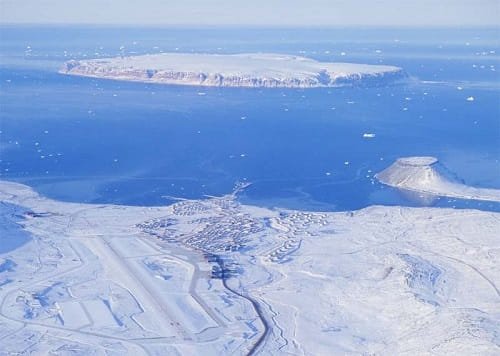
Denmark’s claim over Greenland dates back to the early 18th century, when Danish-Norwegian missionaries and traders established control over the island. Over time, Greenland became a Danish colony.
After World War II, global attitudes toward colonialism changed. Greenland’s status evolved, but Denmark retained sovereignty. In 1953, Greenland became an integral part of Denmark rather than a colony. Later reforms granted home rule and then self-rule.
Today, Denmark argues that Greenland’s autonomy exists within Danish sovereignty. Greenland’s leaders often respond: autonomy is not independence.
Why the United States Is So Interested
The United States has seen Greenland as strategically vital for decades. During the Cold War, its location between North America and Europe made it a perfect site for early-warning radar systems.
This led to the establishment of Thule Air Base, now known as Pituffik Space Base. It remains one of the most important U.S. military installations in the Arctic.
In 2019, the world was shocked when then U.S. President Donald Trump publicly suggested buying Greenland from Denmark. Denmark rejected the idea immediately, calling it absurd. But the proposal revealed something deeper: Greenland’s strategic value is increasing fast.
Climate Change: The Real Game-Changer
The Greenland dispute cannot be understood without climate change.
As Arctic ice melts, new shipping routes are opening. What once took weeks through the Suez Canal may one day take days across the Arctic. Greenland sits near these emerging sea lanes.
Melting ice is also exposing valuable natural resources. Greenland holds deposits of rare earth elements, uranium, iron ore, oil, and gas. Rare earth minerals are especially critical because they are essential for smartphones, electric vehicles, and military technology.
Right now, China dominates global rare earth processing. This makes Greenland extremely attractive to countries seeking supply independence.
China and Russia Enter the Arctic Picture
China officially calls itself a “near-Arctic state.” It has invested in Arctic research, shipping, and mining projects. Greenland has already seen Chinese interest in airport construction and mining ventures, raising alarms in Washington and Copenhagen.
Russia, meanwhile, is rapidly militarizing the Arctic. It has expanded bases, icebreaker fleets, and missile systems across its northern coast. For Russia, the Arctic is both an economic lifeline and a military buffer.
Greenland, sitting between North America and Europe, becomes a silent pivot point in this growing Arctic rivalry.
Greenland’s Own Dilemma
For Greenlanders, the dispute is deeply personal.
Independence is a powerful dream. Control over resources could fund a future free from Danish subsidies. But mining and oil extraction come with environmental risks that could threaten traditional ways of life.
There is also fear of becoming dependent on new powers. Trading Danish influence for American or Chinese pressure does not feel like true freedom to many locals.
Greenland’s leaders often walk a careful line: welcoming investment, protecting culture, and avoiding becoming a pawn in global power politics.
International Law and Arctic Claims
Under international law, especially the United Nations Convention on the Law of the Sea, countries can claim parts of the Arctic seabed if they prove geological connections.
Denmark, through Greenland, has submitted claims that overlap with Russian and Canadian claims near the North Pole. These are legal disputes, not military ones, but they add tension to an already sensitive region.
So far, Arctic nations have mostly followed legal channels. Whether that restraint holds in the future remains uncertain.
Is Greenland Headed Toward Independence?
Independence is possible, but not imminent.
Economic self-sufficiency remains the biggest obstacle. Mining alone may not replace Danish support quickly. Climate change also brings unpredictable risks to infrastructure and livelihoods.
Still, the direction is clear. Greenland wants more control. The world wants Greenland. Denmark wants stability. The United States wants security. China wants access.
That mix guarantees one thing: Greenland will not stay quiet forever.
The Bigger Picture
The Greenland dispute is not about land alone. It is about a warming planet, shifting power, and the question of who shapes the future of the Arctic.
What happens in Greenland will influence global trade routes, military balance, environmental policy, and indigenous rights. The ice is melting, but the political temperature is rising.
In the coming decades, Greenland may become one of the most important places on Earth—not despite its isolation, but because of it.

Satyakam is a seasoned professional content writer with over 15 years of experience in creating high-quality, research-driven content for digital platforms. He specialises in business, finance, banking, law, technology, and informational blogs.