Most people know the standard sliding door, the kind that glides along a track to open up a patio or balcony. Far fewer know there is a premium version engineered to move enormous glass panels with a single, effortless push. Tilt and slide doors take everything that makes aluminium sliding doors popular- the slim frames, the big views, the space-saving operation and fix the one problem that holds ordinary sliders back on large openings. The result is a door that feels light in the hand yet seals tight against weather and noise. Here is how the upgrade works and why it deserves a place on your radar.
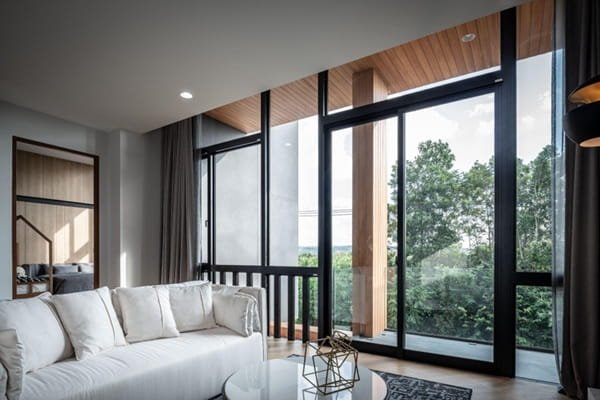
How a tilt and slide door works
The clever part is in the handle, which drives a geared mechanism that changes how the panel sits on its track:
- Turn the handle and the entire panel lifts a few millimetres, clear of its weather seals.
- Lifted off the seals, even a very heavy panel glides along the track with one finger.
- Lower the handle, and the panel settles back down, pressing firmly onto the seals.
That simple lift-and-drop action is what lets the door carry large, heavy glass while still closing airtight.
Standard sliding vs tilt and slide
Set against standard aluminium sliding doors, a lift-and-slide system behaves differently once the panels get big:
| Feature | Standard sliding door | Lift-and-slide door |
| Panel size | Best for small to medium-sized panels | Suitable for very large, heavy panels |
| Operation | Rolls on wheels along the track | Lifts off the seals, then glides along the track |
| Seal when closed | Provides a good everyday seal | Presses firmly against the seals for a tighter closure |
| Weather and noise | Offers standard resistance | Provides stronger resistance to draughts and sound |
| Best use | Everyday openings | Large, premium openings |
The choice depends on the opening size, panel weight, and the level of weather and sound protection required. Standard sliding doors work well for everyday use, while lift-and-slide systems may suit larger openings where stronger sealing and easier movement are priorities.
Performance and design
As the premium tier of the sliding door family, a lift-and-slide system is built for scale. The frames are powder-coated to resist corrosion and need very little upkeep. Because the panel seals so tightly when lowered, it improves thermal insulation and reduces outside noise, which matters for homes near busy roads. The slim frames also suit the clean lines of contemporary aluminium door design, letting glass dominate while the frame recedes. That mix of big-glass looks and high performance is why tilt and slide sits at the top of the market.
Security and everyday usability
Large glass panels can make homeowners wonder whether a lift-and-slide system provides adequate security. The locking mechanism plays an important role here. When the panel lowers into position, the system engages the frame and seals, creating a secure closed position. Depending on the configuration, multi-point locking can provide additional protection around the opening.
Everyday usability is another advantage. A large glass panel can be difficult to move if the full weight stays on the track during movement. The lift mechanism reduces this resistance before the panel starts sliding. This makes opening and closing more manageable, even when the door spans a substantial width. The smooth movement can also make the system suitable for frequently used connections between indoor living areas and balconies, patios, or gardens.
Must Read:- 10 Stunning Aluminium Door Design Ideas for a Modern Entrance
What to consider before installation
A lift-and-slide door involves more than choosing the frame and glass. Consider these factors before installation:
- Opening size: Measure accurately to select the right panel size and configuration.
- Structural support: Ensure the structure can support the frame and glass panels.
- Panel configuration: Consider the number of panels and how they move.
- Glazing: Choose glazing based on insulation, privacy, light, and noise requirements.
- Weather exposure: Consider seals and glazing suited to local conditions.
- Drainage: Ensure the track can manage water effectively.
- Security: Choose a suitable locking system for secure closure.
- Installation quality: Accurate installation helps maintain alignment and smooth operation.
Considering these factors can make it easier to choose a suitable lift-and-slide system. TOSTEM offers lift-and-slide solutions to consider based on opening size, performance requirements, and overall design.
Conclusion
Tilt and slide doors are more than oversized sliders; the lifting mechanism is what makes large glass practical, sealing tightly when shut and gliding freely when open. For anyone drawn to clean, glass-led aluminium door design, the upgrade solves the weight-and-seal trade-off that holds ordinary sliders back. A quality lift-and-slide system rewards the investment with smooth operation, strong weather resistance and a long service life.

Santosh Kumar is a Professional SEO and Blogger, With the help of this blog he is trying to share top 10 lists, facts, entertainment news from India and all around the world.