

Most lending organisations in India have spent years optimising the wrong end of the credit cycle. Disbursement pipelines are lean, digital, and fast. Recovery, by contrast, still runs on phone calls, field visits, and manual reconciliation that nobody enjoys doing and nobody does consistently well.
Loan collection is where that changes. UPI Autopay and eNACH have quietly become the most significant infrastructure shift in retail lending recovery since the credit bureau became standard, and the NBFCs and fintechs that have embedded these tools into their collections stack are seeing the results directly in their DPD buckets.
Why Manual Collection Was Always a Temporary Solution
The field-agent model made sense at a certain scale. Small loan books, known borrowers, localised geographies. Once an NBFC or MFI crosses a few thousand active accounts, the model starts to buckle. Agents get stretched thin. Visit frequency drops. Early-bucket accounts that should be caught at 7 DPD are sitting uncontacted at 30 DPD because nobody had the bandwidth.
The deeper problem is not capacity. It is timing. A borrower who misses an EMI on the 5th is easiest to reach on the 6th or 7th. Manual collection teams rarely get there that early. By the time the account surfaces in a follow-up queue, the psychological window for easy resolution has already closed.
Every day of delay in early-bucket contact costs money. Not in a vague, directional sense. There is a measurable reduction in settlement probability that compounds with each passing week.
What UPI Autopay Does to Your Delinquency Funnel
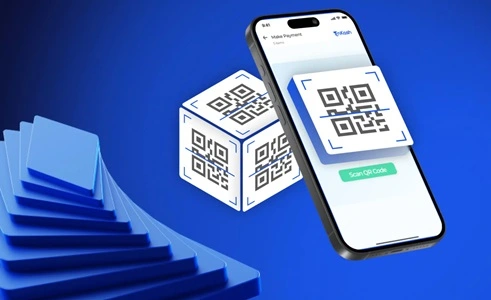
UPI Autopay is a recurring payment mandate that allows a lender to initiate scheduled debits from a borrower’s UPI-linked account. Consent is obtained once at loan origination, and the system handles every subsequent loan collection automatically on the due date.
The impact is direct. A borrower who intended to pay but forgot settles without any agent involvement. Industry practitioners across MSME and retail lending portfolios consistently observe that a meaningful share of early-bucket delinquency is friction-driven rather than credit-driven. UPI Autopay eliminates that friction entirely.
Where the autopay attempt fails, the system generates an immediate signal. The failure is logged, the borrower is notified, and the account enters a follow-up sequence calibrated to the failure reason. Insufficient balance triggers a different path than a blocked mandate, and that distinction determines whether a retry is likely to succeed or whether human intervention is warranted.
eNACH and the Case for Bank-Level Mandate Infrastructure
UPI Autopay works well for borrowers whose primary financial activity runs through a UPI-linked account. For older borrower profiles or products where bank account debits are more reliable, eNACH remains the stronger instrument for loan collection.
eNACH operates through the NACH framework administered by NPCI. A mandate is registered against the borrower’s bank account at origination, authorising the lender to debit scheduled amounts on agreed dates. The debit happens at the banking layer, independent of whether the borrower’s phone is active or their UPI app is updated.
The table below captures how the two instruments compare across dimensions that matter most for collection operations:
| Parameter | UPI Autopay | eNACH |
| Settlement Layer | UPI ecosystem | Bank account direct debit |
| Borrower Action Required | One-time consent at origination | One-time mandate registration |
| Best Suited For | Digital-first, younger borrower profiles | Broader base, higher ticket sizes |
| Failure Notification | Immediate, system-generated | Available via NACH return codes |
| Retry Flexibility | High, configurable within UPI rails | Structured, subject to NACH timelines |
The lenders extracting the most value from loan collection automation are those running both instruments in parallel, routing borrowers to the appropriate mandate type based on profile and product.
The Compliance Case That Rarely Gets Discussed
Every automated mandate attempt generates a timestamped record. Every failure carries a return code. Every communication triggered by a mandate event is logged against the borrower account automatically.
RBI’s Digital Lending Guidelines of 2022 require lenders to maintain clear records of collection activity and borrower communication. Manual operations can comply in principle. In practice, consistency is difficult to guarantee across branches, agents, and shift changes. Automated loan collection infrastructure makes compliance the default rather than the aspiration.
For fintech lenders and NBFCs in active fundraising conversations, that audit trail is increasingly a due diligence requirement, not a back-office nicety.
Conclusion
Loan collection in India is not short of tools. What it has historically been short of is timing, consistency, and documentation that holds up under scrutiny.
UPI Autopay and eNACH address all three. They reach borrowers at the moment repayment is most likely to happen, they operate without human latency, and they generate the records that regulatory and commercial relationships increasingly demand.
The lending organisations building these instruments into their collections stack are not making a technology bet. They are making an operational choice that compounds quietly in their favour with every EMI cycle.

Santosh Kumar is a Professional SEO and Blogger, With the help of this blog he is trying to share top 10 lists, facts, entertainment news from India and all around the world.