In a dramatic and sweeping escalation of Middle East tensions, the United States and Israel have launched a major coordinated military campaign against Iran, a move that has plunged the region into its most intense crisis in years. The military strikes — which began on February 28, 2026 — have targeted Iranian nuclear facilities, military infrastructure, and top political leadership. The most significant development so far: Iran’s Supreme Leader, Ayatollah Ali Khamenei, has been officially confirmed killed in the bombing campaign.
This operation marks a turning point in decades-long tensions between Tehran, Washington, and Jerusalem — and it raises serious questions about the future of regional stability. Here’s what’s known so far.
How the Attacks Unfolded
The military campaign began late on February 28, 2026, with coordinated air and missile strikes across Iran. The joint operation — referred to by some Western officials as Operation Epic Fury — involved hundreds of precision strikes on military sites, nuclear facilities, and command centers.
According to experts following the situation closely:
● The initial wave included strikes on Iran’s Tehran, Isfahan, Natanz, and Fordow facilities, believed to house nuclear and ballistic-missile infrastructure.
● The U.S. military and Israeli Defense Forces (IDF) struck defensive systems, missile batteries, and strategic leadership compounds with advanced munitions and aircraft.
President Donald Trump, who is directing the U.S. response, described the campaign as necessary to prevent Iran from developing nuclear weapons and as a broader effort to dismantle what he labeled a “terrorist regime.”
Israeli Prime Minister Benjamin Netanyahu issued public statements signaling that the strikes were successful in disabling key Iranian leadership structures and that further operations were likely.
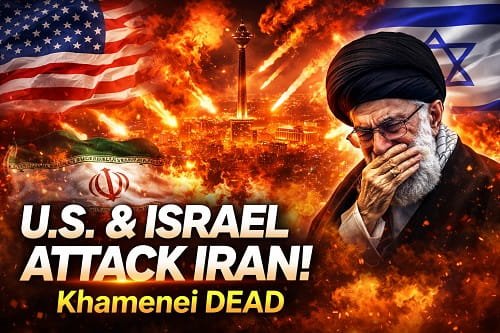
The Death of Ayatollah Ali Khamenei
The most consequential development has been the death of Iran’s Supreme Leader, Ali Khamenei.
For decades, Khamenei was the most powerful figure in Iranian politics. He wielded final authority over the country’s military, foreign policy, and nuclear direction. On March 1, 2026, Iranian state media confirmed he had been killed in the joint U.S.-Israeli strikes, marking an extraordinary and unprecedented moment in modern Middle East history.
Reports indicate that a bunker-buster strike hit a secure compound in Tehran where Khamenei was meeting with senior advisers and commanders. Alongside him, several members of his family and other top officials were killed.
International coverage shows wide agreement on this fact:
● Iranian state TV broadcast mourning and declared a 40-day national mourning period.
● Western media agencies, including Reuters and the Guardian, reported that senior Iranian government and Revolutionary Guard leaders were killed or seriously wounded in the assault.
In political terms, this shift represents the end of an era. Khamenei had led Iran since 1989, and his leadership shaped Iran’s anti-Western foreign policy, nuclear ambitions, and strategic alliances throughout the region.
Reactions Inside Iran
The impact inside Iran has been immediate and severe.
Official state media confirmed multiple civilian casualties alongside the deaths of political figures. Reports from Iranian local news agencies indicated hundreds of deaths and hundreds more injured as the strikes hit major cities and infrastructure.
The announcement of Khamenei’s death triggered widespread mourning among government supporters. In major urban centers like Tehran and Mashhad, mourners took to the streets with black flags and slogans responding to the loss.
At the same time, Iran’s Islamic Revolutionary Guard Corps (IRGC) vowed a “devastating offensive” in retaliation, signaling a swift escalation of hostilities across the region.
Iran’s Retaliation and Regional Ripple Effects
Even as the initial airstrikes were underway, Iran fired missiles and drones in retaliation toward Israeli territory and U.S. military installations in the Gulf region, including bases in countries like Bahrain and the United Arab Emirates.
Several Gulf states closed their airspace and advised citizens to stay vigilant as Iranian missile debris and counterattacks caused damage and civilian injuries in places as far away as Dubai.
This has created a wider security shakeup:
● Flight cancellations and travel advisories have spread across the Middle East.
● Regional actors, including Yemeni Houthi rebels, publicly expressed solidarity with Iran and threatened broader action.
● Emergency meetings among NATO and European diplomatic channels underscore international alarm over uncontrollable escalation.
Political and Global Responses
Reactions around the world have varied sharply.
In the United States, political leaders are deeply divided. Some lawmakers have expressed support for removing a longtime adversary, while others argue the strikes were an unnecessary escalation made without congressional authorization. Protesters have rallied in major American cities against the war, calling for an immediate ceasefire.
European nations have called for urgent diplomacy and restraint, with officials stressing that military action alone cannot resolve the underlying issues that led to the conflict.
Meanwhile, world powers like China and Russia have condemned the strikes and urged an immediate ceasefire, warning that the situation could spiral into a broader global conflict.
What This Means for the Future
The death of Ayatollah Khamenei and the ongoing assault on Iran’s military and nuclear capabilities mark a watershed moment. The conflict has already:
● Created a leadership vacuum in Tehran, with uncertainty over who will succeed and how the political system will respond.
● Intensified regional tensions far beyond Iran’s borders, drawing in allied and proxy forces.
● Raised global concerns about nuclear proliferation, regional alliances, and the risk of wider conflict.
If the situation continues along its current trajectory, it could reshape Middle East geopolitics for generations.

Satyakam is a seasoned professional content writer with over 15 years of experience in creating high-quality, research-driven content for digital platforms. He specialises in business, finance, banking, law, technology, and informational blogs.