After decades of pushing human limits beyond Earth, Sunita Williams has retired from active astronaut service, bringing one of NASA’s most respected careers to a close. Her journey wasn’t just about missions and records. It was about consistency, courage, and quiet leadership in one of the toughest professions on the planet.
Williams leaves behind a legacy that stretches from naval aviation decks to the far edges of low-Earth orbit.
From Navy Pilot to NASA Astronaut
Sunita Williams didn’t take a straight line to space. She began as a U.S. Navy test pilot, flying helicopters and fixed-wing aircraft. That background mattered. NASA values calm judgment under pressure, and Williams had plenty of it.
She was selected as an astronaut by NASA in 1998. At the time, the astronaut corps was highly competitive. Thousands applied. Only a handful were chosen. Williams stood out not because she chased attention, but because she delivered results.
Record-Setting Missions in Space
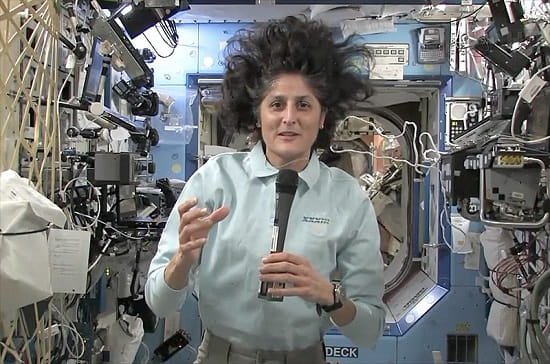
Williams flew two long-duration missions to the International Space Station. Across those missions, she spent more than 300 days in space. That alone puts her among an elite group.
She also completed multiple spacewalks, logging over 50 hours outside the station. Each spacewalk is physically demanding and mentally exhausting. There’s no room for mistakes. Her performance earned deep respect inside NASA and among international partners.
At one point, she held the record for the most spacewalk time by a female astronaut — a record that symbolized more than numbers. It showed how far astronaut selection had evolved.
Commander of the Space Station
One of the defining moments of Williams’ career came when she became commander of the International Space Station. This role isn’t ceremonial. The commander is responsible for crew safety, mission success, and coordination with ground teams across multiple countries.
Williams handled the job with a calm, steady style. Former colleagues often described her as focused, approachable, and unshaken by stress. That leadership style became her trademark.
A Role Model Beyond Space
Sunita Williams’ influence went far beyond mission logs. As an Indian-American astronaut, she became a symbol of representation for millions. Students in India, the United States, and across the world followed her missions closely.
She frequently spoke about discipline, preparation, and patience. Not fame. Not shortcuts. Just showing up every day and doing the work.
Her retirement marks the end of active duty, but not the end of that influence.
Why Her Retirement Matters
Astronaut retirements aren’t sudden. They’re carefully planned. By the time an astronaut steps away, they’ve already trained the next generation, documented lessons learned, and helped shape future missions.
Williams retires at a time when human spaceflight is changing fast. Commercial spacecraft, lunar programs, and deep-space ambitions are reshaping NASA’s priorities. Her experience helped bridge the era of Space Shuttle missions and the modern age of private-public spaceflight.
That transition matters.
Life After NASA
Retirement from astronaut service doesn’t mean disappearing. Most former astronauts continue contributing through teaching, advisory roles, or public engagement. Williams is expected to remain connected to space exploration, even if she’s no longer boarding rockets.
She has often spoken about inspiring young people to pursue science and engineering. That work is far from finished.
A Career Defined by Consistency
Sunita Williams was never the loudest voice in the room. She didn’t need to be. Her career was built on reliability, resilience, and trust — the qualities NASA depends on when lives are at stake hundreds of kilometers above Earth.
Her retirement closes an important chapter in modern space history.
Conclusion
Sunita Williams’ retirement marks the end of an extraordinary chapter, not just for NASA but for human spaceflight as a whole. Her career reminds us that space exploration isn’t driven by headlines. It’s driven by people who prepare quietly, work relentlessly, and perform when it matters most.
As new astronauts take their first steps into orbit, they’ll be following paths shaped by pioneers like her.

Satyakam is a seasoned professional content writer with over 15 years of experience in creating high-quality, research-driven content for digital platforms. He specialises in business, finance, banking, law, technology, and informational blogs.