
In recent years, China has aggressively marketed its radar and air-defence systems as modern, powerful, and capable of countering even stealth aircraft. Countries like Pakistan and Venezuela invested heavily in these systems, believing they could create strong protective air shields. But events in 2025–26, especially the U.S. military operation in Venezuela and lessons drawn from regional conflicts involving Pakistan, have exposed serious weaknesses.
This article explains, in simple terms, what failed, why it failed, and what it really means — without hype or exaggeration.
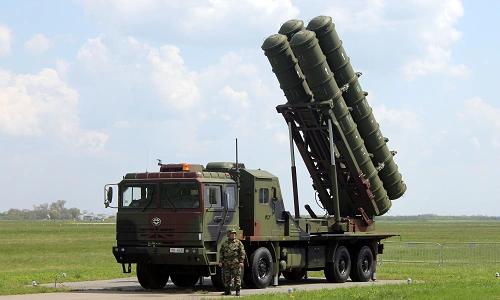
The Venezuela Shock: When the Radar Went Blind
In January 2026, the United States carried out a large, coordinated military operation inside Venezuela. Hundreds of aircraft, electronic-warfare platforms, drones, and special forces operated freely over Venezuelan territory. The result was stunning: Venezuela’s air-defence network failed to detect, track, or stop the operation in any meaningful way.
This was alarming because Venezuela had invested in Chinese-supplied radars, including systems promoted as “anti-stealth.” On paper, these radars were supposed to provide early warning and track advanced aircraft.
In reality:
- Radar screens went silent or confused
- Command centres lost situational awareness
- Air-defence missiles were never effectively launched
- The defensive network collapsed within hours
For a system designed to protect national airspace, this was a massive operational failure.
Why Chinese Radars Failed in Venezuela
The failure was not due to one single flaw. It was a chain of weaknesses.
1. Electronic Warfare Overwhelmed the Radars
Modern warfare does not start with bombs. It starts with electronic attacks. U.S. forces jammed, spoofed, and disrupted radar frequencies, making the systems either blind or unreliable. Many Chinese export radars are not hardened enough to survive sustained electronic warfare from a top-tier military.
2. Poor Integration of Systems
Air defence works only when radars, missiles, command centres, and communication links function as one network. In Venezuela, once a few radar sites or data links were disrupted, the entire system collapsed. There were not enough backups or alternate communication paths.
3. Export Versions Are Weaker
China does not sell its best versions abroad. Export systems are often:
- Older designs
- Software-restricted
- Less resistant to jamming
What failed in Venezuela were export-grade systems, not China’s most advanced domestic models.
4. Training and Maintenance Were Inadequate
Radar systems are complex machines. They need constant calibration, trained crews, and real-world exercises. Venezuelan operators lacked deep training, and maintenance standards were poor. Even good equipment performs badly in untrained hands.
The Pakistan Connection: Similar Concerns
Pakistan relies heavily on Chinese air-defence systems, including long-range surface-to-air missiles and early-warning radars. These systems form the backbone of Pakistan’s air defence.
During Operation Sindoor (2025) and related regional military exchanges, Indian forces reportedly:
- Used electronic warfare to confuse radar coverage
- Exploited gaps in Pakistani air-defence networks
- Completed precision strikes faster than expected
While Pakistan did intercept some threats, the overall picture showed that Chinese-origin air-defence systems can be bypassed when facing a technologically superior opponent with strong electronic warfare capability.
This raised concerns even inside Pakistan’s defence circles.
The Core Problem: Marketing vs Battlefield Reality
China’s defence industry promotes its radars and missiles as:
- “Anti-stealth”
- “Long-range”
- “Highly accurate”
But real combat has shown a harsh truth:
A radar is only as good as its ability to survive electronic warfare, cyber attacks, and command-and-control disruption.
In both Venezuela and Pakistan’s case:
- Radars were overwhelmed electronically
- Networks were fragmented
- Command decisions were delayed or impossible
This does not mean Chinese systems are “junk.” It means they do not perform as advertised in high-end combat without excellent integration, training, and protection.
Why the Failures Matter Globally
1. Damage to China’s Arms Reputation
Countries buy weapons based on combat credibility. Venezuela’s failure has damaged confidence in Chinese radar exports. Future buyers will question whether these systems can protect them in real war.
2. Lessons for Other Militaries
The incidents reinforce a key lesson: air defence is not about buying hardware; it is about building a resilient network.
3. Reality Check for China Itself
While China’s own military uses more advanced and better-trained systems, export failures still reflect poorly on Chinese technology. They expose gaps that adversaries will study carefully.
What Actually Works in Modern Air Defence
Modern air defence requires:
- Multiple overlapping radars
- Hardened communication networks
- Strong electronic-warfare resistance
- Continuous training and realistic exercises
- Rapid decision-making at all levels
Without these, even the most advanced radar becomes useless once the shooting starts.
Final Assessment (Straight Truth)
- China’s radar and air-defence systems suffered serious real-world exposure in Venezuela.
- Similar weaknesses were observed in Pakistan’s Chinese-supplied air-defence network.
- The failures were caused by electronic warfare vulnerability, poor integration, weak export variants, and inadequate training.
- These events do not prove China’s entire defence industry is inferior, but they do prove that Chinese export systems are not reliable shields against top-tier military forces.
In modern warfare, dominance belongs not to the side with the most radars, but to the side that can blind the enemy first.
Venezuela learned this the hard way.

Santosh Kumar is a Professional SEO and Blogger, With the help of this blog he is trying to share top 10 lists, facts, entertainment news from India and all around the world.