China has taken a bold step in ocean science by launching what it calls the world’s first open-sea floating artificial island designed for weather and deep-sea research. At first glance, the term “artificial island” might sound like land built in the ocean. But this is something different. It is not fixed to the seabed. Instead, it floats and moves, acting more like a giant mobile laboratory than a traditional island.
This project reflects a growing global focus on understanding oceans, climate, and extreme weather. With rising concerns about climate change, stronger storms, and unpredictable weather patterns, scientists need better tools. This floating platform could be one of the most important ones yet.
What Exactly Is This Floating Island?
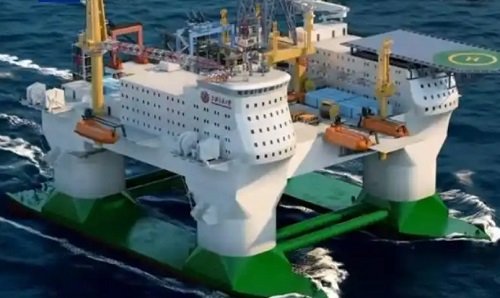
The structure is essentially a large-scale floating research station built to operate in the open sea. Unlike reclaimed islands made of sand and rock, this platform uses a semi-submersible twin-hull design. That means part of it stays underwater, giving it better balance and stability even in rough ocean conditions.
Because of this design, the platform can remain steady during storms, making it ideal for long-term scientific missions. It is expected to host scientists, engineers, and crew members for extended periods, turning it into a fully functional offshore research hub.
Why Study Weather from the Ocean?
Most major weather systems, especially cyclones and typhoons, form over oceans. Yet, collecting accurate data from the middle of the sea has always been difficult. Satellites help, but they cannot capture everything happening at the surface level.
This floating island changes that.
By placing researchers directly in the ocean environment, it allows them to:
- Track storms as they form and evolve
- Measure ocean temperatures and currents in real time
- Study how ocean conditions affect climate patterns
Being physically present in the ocean provides a level of detail that remote systems often miss. This could significantly improve weather forecasting and early warning systems, which is crucial for countries vulnerable to cyclones.
Key Features of the Platform
The floating island is not just a basic research station. It is packed with advanced systems and capabilities:
- High stability designto withstand strong waves and harsh weather
- Deep-sea exploration capability, reaching depths of up to 10,000 meters
- Advanced monitoring systems, including weather radar and ocean sensors
- Accommodation for over 200 people, allowing long-duration missions
- Multi-unit structure, including support vessels and shore-based systems
These features make it one of the most advanced ocean research platforms ever planned.
More Than Just Weather Research
While weather study is a major focus, the platform will serve multiple scientific purposes.
Researchers will also use it for:
- Marine ecosystem studiesto understand ocean life
- Deep-sea resource exploration, including minerals and energy sources
- Testing offshore technologiesused in oil and gas industries
- Studying the origins of life, as deep oceans hold clues about early Earth
This makes the floating island a multi-purpose research hub, not limited to a single field.
Strategic and Global Importance
Although the project is officially scientific, it has broader implications. Platforms like this can also support navigation, ocean monitoring, and long-term presence in strategic waters.
Many experts believe such structures could play a role in future maritime competition, especially in regions where control over ocean resources matters. However, China has emphasized its scientific goals and its aim to lead in marine research.
Timeline and Future Vision
The project began in 2026, with construction and development already underway. It is expected to become fully operational around 2030.
Once completed, it could become a central hub for international ocean research and collaboration. It may also inspire other countries to develop similar floating laboratories.
Final Thoughts
China’s floating artificial island is not just an engineering project. It represents a shift in how humans study the ocean and weather. Instead of observing from afar, scientists are moving directly into the environment they want to understand.
In simple terms, this is like building a laboratory in the middle of the ocean, where real-time data can lead to better predictions, safer coastal communities, and deeper knowledge of our planet.
If the project succeeds, it could change the future of weather forecasting and ocean science for decades to come.

Satyakam is a seasoned professional content writer with over 15 years of experience in creating high-quality, research-driven content for digital platforms. He specialises in business, finance, banking, law, technology, and informational blogs.