
Alice Huang, a Chinese businesswoman who once helped lead a Singapore-based cloud-computing company, has become a central figure in an extraordinary controversy involving NVIDIA, its chief executive Jensen Huang, US national security concerns and the global trade in advanced artificial intelligence chips. What began as questions about a major NVIDIA customer has widened into allegations of espionage, an admission of marital infidelity by the chipmaker’s CEO, a company investigation and legal action by shareholders.
The most serious claims have not been proved publicly. US intelligence officials reportedly believe Alice Huang was recruited by Chinese intelligence, but the underlying evidence has not been released. China denies the accusation, and NVIDIA says it has no reason to believe its trade secrets or US national security information were compromised. As of 11 November 2026, investigations are continuing and several crucial questions remain unanswered.
Who is Alice Huang?
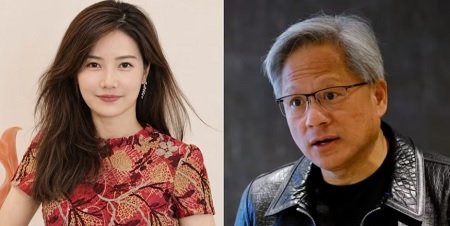
Alice Huang, also known as Huang Le, is a Chinese business executive whose documented career includes investment management and a senior role at Megaspeed International, a Singapore-based business that rents computing power built around powerful graphics processing units. She is not related to Jensen Huang, despite their shared surname.
Reuters reviewed more than 30 financial records, company documents and corporate filings while examining her professional background. Its reporting traced her to senior positions at Shanghai Hexi Investment Management before she became the controlling shareholder of Megaspeed in March 2023. Company materials from 2016 and 2017 identified her at Hexi as a deputy general manager, executive director and member of its investment decision committee.
Biographical information circulating about her earlier years is less certain. A Chinese private-fund database profile lists previous work at HSBC’s private bank in Hong Kong, CITIC Securities and television outlets including CCTV and Hunan TV. Reuters located references to the banking positions in company materials, but the full account of her education, broadcasting career and earlier employment has not been independently established. Her exact age, birthplace and education remain unclear; reports giving an approximate age should not be treated as a verified date of birth.
How did Alice Huang become involved with Megaspeed?
Megaspeed was incorporated in Singapore in 2015 under the name 7Road International, reflecting its earlier connection to the Chinese video-game industry. The company changed its name to Megaspeed International in March 2023, at around the time Alice Huang became a director, managing director and controlling shareholder through Huang Le Limited.
The business moved into supplying cloud-computing capacity for artificial intelligence. In simple terms, customers could rent access to servers powered by NVIDIA processors rather than buy and operate the hardware themselves. Megaspeed has described itself as an NVIDIA cloud partner, and NVIDIA listed it in its official partner directory. That commercial connection placed a company associated with Alice Huang close to the most sought-after AI chips in the world.
Corporate records show that Megaspeed’s shares were transferred later in 2023 to another Singapore company, Swiftdata, and that Alice Huang left the board by November that year. Her subsequent role is disputed. A short-selling research firm and other reporting cited people suggesting she remained influential in the company after her formal departure. Reuters said researchers could not determine who ultimately controlled Swiftdata, and the precise extent of her continuing authority has not been conclusively established.
What is Alice Huang’s connection to Jensen Huang?
Jensen Huang is NVIDIA’s co-founder and long-serving chief executive, and one of the most prominent figures in the AI industry. His company supplies processors used in AI development, data centres and high-performance computing. Alice Huang’s reported contacts with him occurred against the backdrop of her involvement with an NVIDIA business customer.
Photographs show them at technology-industry gatherings in Taipei. They appeared at a 2024 Computex-related event, where a photograph posted online showed them seated near each other, and video from a dinner during the May 2025 Computex period showed them together again. Reuters and other news organisations have reviewed footage or photographs associated with those occasions. Such public appearances demonstrate contact, but do not independently establish the duration or nature of a private relationship.
When questions about the connection first emerged publicly in late October 2026, NVIDIA said its CEO routinely meets thousands of customer executives and characterized his interactions with Alice Huang as normal business contact. The controversy took a different turn on 8 November, when Jensen Huang acknowledged in a message to employees that he had been unfaithful to his wife, Lori Huang, and apologized for hurting his family. He did not identify the other person in that message. News organisations have linked his admission to reporting about Alice Huang, but the identity and full timeline of the relationship have not been publicly confirmed by him.
Why has Alice Huang been accused of spying for China?
The espionage allegation stems principally from reporting by The New York Times and other news outlets citing people familiar with US intelligence assessments. According to those accounts, American officials concluded that China’s Ministry of State Security had recruited Alice Huang to develop a relationship with Jensen Huang, gather information about sensitive AI technology and potentially influence the availability of advanced NVIDIA chips to Chinese customers.
That is an intelligence allegation, not a publicly established finding of guilt. No underlying intelligence dossier establishing the claim has been released, and Reuters said it could not independently verify the accusation. It remains unknown what information, if any, Alice Huang may have provided, whether any NVIDIA confidential information was obtained, or whether Jensen Huang knew of any alleged intelligence role.
Beijing has rejected the allegations. Chinese Foreign Ministry spokesperson Guo Jiakun described the claims as unsubstantiated and as an attempt to discredit China. Alice Huang has not issued a public response that major news organisations have been able to obtain, and reporters have been unable to establish her current whereabouts.
Why is Megaspeed under investigation over NVIDIA chips?
The separate commercial question involves restrictions imposed by the United States on exports of advanced AI processors to China. Chips such as NVIDIA’s H100 can be used to train sophisticated AI systems, making them strategically important. US authorities have been examining whether intermediaries in Southeast Asia helped Chinese customers gain access to restricted hardware or computing capacity.
Megaspeed drew scrutiny in 2025 amid concerns that it might be facilitating access to restricted NVIDIA processors for Chinese users. It has denied wrongdoing. The New York Times reported that Megaspeed had bought more than $4.8 billion of NVIDIA equipment over approximately two years. That reported purchase figure describes commercial scale; it is not, by itself, proof of unlawful exports.
Reuters reviewed trade records indicating that Megaspeed’s Indonesian subsidiary imported NVIDIA hardware, including H100 processors and related components, between 2024 and 2026. Reuters explicitly noted that shipping such products to Indonesia does not in itself establish any violation of US export controls. No public finding has established that Megaspeed broke those rules.
What is the reported $7.5 billion chip-shipment claim?
On 10 November 2026, Reuters reported that the technology publication The Information had alleged a network associated with Alice Huang helped move at least $7.5 billion worth of NVIDIA chips to Chinese firms. The report, citing people familiar with her business dealings, said Alice Huang, her husband and sister were connected to companies operating across China and Singapore.
According to that account, Shanghai Century Litong, a company formed in China in June 2023, secured a preferred NVIDIA cloud-partner relationship within months. When supplies of chips subject to US export restrictions became difficult to obtain, the report alleged, Alice Huang used business contacts to help secure processors. The Information estimated that approximately 240,000 H100, H200 and some A100 chips moved through the arrangements, with some hardware or computing resources allegedly reaching major Chinese technology companies and smaller AI laboratories.
These are disputed, independently unverified reporting claims, not confirmed quantities from an official enforcement finding. Reuters said it could not independently verify the broader accounts and that NVIDIA and several companies named in the reports had not provided immediate comment. The reported $7.5 billion in shipments should also not be confused with the separate $4.8 billion figure reported for Megaspeed’s NVIDIA purchases.
What has Singapore said about Alice Huang and Megaspeed?
Singapore has drawn an important distinction between an investigation into a company and an investigation into the woman associated with it. In an official clarification dated 30 October 2026, the Singapore Police Force and Ministry of Home Affairs said that investigations into Megaspeed were ongoing. However, they specifically rejected reporting that Singaporean authorities had investigated Alice Huang’s alleged links to Jensen Huang or Chinese intelligence.
The government stated that no such investigation had been conducted in respect of Alice Huang. It also explained that Singapore does not automatically enforce other countries’ unilateral export controls, but does act against fraud and other breaches of Singapore law. Claims that Singapore arrested, charged or investigated Alice Huang personally over spying should therefore not be presented as established facts.
How have NVIDIA and US authorities responded?
On 8 November, NVIDIA’s board announced that a committee of independent directors, supported by outside counsel, would investigate reports that its CEO may have been targeted by a foreign intelligence effort. The company said it had no reason to believe either national security information or NVIDIA secrets had been compromised, but promised to examine the available evidence. It expressed confidence in Jensen Huang and said he would cooperate with the inquiry and continue leading the company.
Reuters subsequently reported that the directors retained Joon Kim, a former acting US attorney and a partner at law firm Wachtell, Lipton, Rosen & Katz, to lead the independent legal work. President Donald Trump said the FBI was looking into the matter. The Associated Press also reported on 11 November that the US Justice Department’s National Security Division was investigating possible export-control violations involving Megaspeed, with Alice Huang’s conduct expected to be examined as part of that inquiry. Those steps indicate scrutiny, not a criminal conviction or an announced charge against her.
The matter has also reached Congress. Senior House Republicans asked Jensen Huang to attend a closed-door briefing scheduled for 18 November about alleged foreign espionage and NVIDIA’s safeguards. Democratic lawmakers have questioned whether enforcement of chip restrictions and the government’s handling of the intelligence concerns have been adequate. Republican Senator Kevin Cramer went further by calling for Jensen Huang to resign. Those are political demands and requests, not findings that he knowingly participated in espionage.
What has Donald Trump said?
Trump said he spoke with Jensen Huang and that the NVIDIA chief had told him he had no idea the woman was allegedly a spy. Trump indicated he believed that explanation. Separately, The New York Times reported that senior US officials had discussed intelligence concerns with the president, including a reported briefing by Secretary of State Marco Rubio in May 2026. The White House disputed aspects of that account. The question of what officials knew, when they knew it and how they handled the information remains politically contested.
Has the controversy affected NVIDIA investors?
Yes. NVIDIA shares came under heavy selling pressure after the board investigation became public. Reuters reported that the company lost roughly $430 billion in market value over two trading sessions through 10 November. Such market-capitalization figures measure changes in the valuation of outstanding shares, rather than money paid out by NVIDIA, and stock movements can reflect more than one concern.
On 9 November, a proposed shareholder class-action lawsuit was filed in federal court in San Jose, California. The complaint accused NVIDIA and Jensen Huang of misleading investors by failing to disclose the alleged relationship and associated risks while making reassuring public statements about Megaspeed. The shareholders are seeking unspecified damages. The accusations are allegations in a civil complaint and have not been proved in court.
What remains unknown?
Despite the volume of reporting, basic facts about Alice Huang’s personal history remain difficult to verify. Her precise age, education, present residence, whereabouts and current business responsibilities have not been reliably established. Jensen Huang has not publicly named the other person involved in his admitted infidelity, and the dates and circumstances of his reported relationship with Alice Huang are still unclear.
More important, the public record has not established that Alice Huang was an intelligence operative, that she obtained NVIDIA trade secrets, that Jensen Huang knowingly helped any intelligence activity, or that alleged exports through Megaspeed violated US law. Those questions require evidence from official inquiries or legal proceedings, rather than assumptions drawn from photographs, anonymous allegations or corporate connections.
The larger significance of the NVIDIA controversy
The Alice Huang story matters because it touches three sensitive areas at once: the personal judgment of a hugely influential technology chief executive, the security of US-developed AI technology and the ability of governments to enforce export restrictions across international supply chains. It has also exposed the risks facing boards when allegations involve the leader most closely identified with a company’s success.
For now, the verified developments are the existence of Alice Huang’s business links to Megaspeed, public reporting of her contact with Jensen Huang, Jensen Huang’s own admission of infidelity, NVIDIA’s independent investigation, government scrutiny and a shareholder lawsuit. The espionage and large-scale chip-diversion allegations remain allegations. The outcome of the investigations will determine whether the controversy ultimately reveals a security breach, violations of export law, governance failings or claims that cannot be substantiated.

Satyakam is a seasoned professional content writer with over 15 years of experience in creating high-quality, research-driven content for digital platforms. He specialises in business, finance, banking, law, technology, and informational blogs.