There’s a small but noticeable shift that’s happened in how people move through shared spaces.
Watch closely in a busy washroom and you’ll see it. A slight pause before pressing a button. A moment of hesitation before touching a dispenser that’s clearly been handled by dozens of people already. It’s not dramatic, but it’s real — and it’s become more common over the last few years.
People are more aware of what they touch. And that awareness has quietly changed what good washroom design needs to account for.
Hygiene is a system problem, not just a cleaning problem
Most facility managers think about hygiene in terms of cleaning schedules. How often surfaces are wiped down, how frequently consumables are restocked, how well staff stay on top of it all. That matters, obviously. But it’s only part of the picture.
The other part is how the space is designed to be used in the first place.
Every surface someone has to touch is a potential transfer point. The more touchpoints in a washroom — dispensers, bin lids, tap handles, door latches the harder it becomes to maintain hygiene consistently, regardless of how often the space is cleaned.
This is where something as functional as a hand dryer starts to matter more than it might seem.
Fewer touchpoints, same behavior
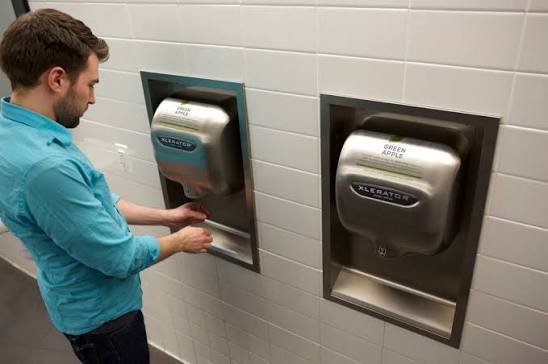
What makes modern automatic hand dryers genuinely useful from a hygiene standpoint isn’t just that they’re contactless. It’s that they’re contactless without asking anything different from the user.
You place your hands under the unit. It starts. You dry. It stops.
No button to press, no lever to push, no sensor to wave at awkwardly. The interaction is immediate and requires nothing extra from the person using it.
That removes one of the most consistently problematic surfaces in a washroom — the thing you touch right after washing your hands. In shared environments with constant traffic, eliminating that contact point has a real cumulative effect.
Consistency is what makes it work at scale
One of the things that gets overlooked in washroom design is how differently things perform under high usage versus low usage.
A system that works fine for a small office might behave completely differently in an airport terminal where hundreds of people pass through every hour. Manual systems in particular — anything that depends on replenishment, disposal, or user cooperation — tend to degrade under volume.
A well-designed hand dryer machine doesn’t have that problem. The experience is essentially the same for the first user in the morning and the five hundredth in the afternoon. Airflow starts, dries, stops. No variation based on whether someone remembered to restock, no deteriorating hygiene around overflowing bins.
That consistency is what makes it a more reliable hygiene solution in high-traffic environments, not just a more convenient one.
Drying properly is part of hygiene — not an afterthought
This is a point that doesn’t get enough attention.
Wet hands transfer bacteria significantly more easily than dry ones. Which means that if someone washes thoroughly but walks out with damp hands, they haven’t fully completed the hygiene process — they’ve just shifted where the contamination risk is.
Modern electric hand dryers address this by prioritizing drying speed and efficiency. Rather than relying purely on heat, high-performance units use strong, directed airflow to push water off the skin quickly. The result is faster drying, which means users are more likely to actually finish the process rather than giving up halfway and wiping their hands on their clothes.
It sounds like a small thing. But in a washroom that sees thousands of users a day, it’s the difference between a system that supports hygiene and one that only partially delivers on it.
The paper towel comparison
Paper towels aren’t inherently bad. In the right setting, they work well.
But in high-traffic commercial environments, they introduce a set of problems that compound with volume. Bins fill up. Surrounding surfaces get cluttered. Dispensers run out at inconvenient times. And the area around them — floor, counter, adjacent walls — tends to collect waste that creates its own hygiene concerns.
A hand dryer keeps the process self-contained. There’s no physical output to manage, no bin to empty, no secondary surface that becomes part of the hygiene equation. From a facilities management standpoint, that simplicity is genuinely valuable when you’re managing a busy building.
What the research and public health guidance says
The World Health Organization has consistently emphasized that hand hygiene — washing and drying — is one of the most effective tools available for reducing infection spread in public spaces. The washing gets most of the attention, but drying is part of the same step.
A well-functioning automatic hand dryer supports that guidance by making proper drying fast, contactless, and consistent. It doesn’t rely on the user to make a good decision — it just works the way it’s supposed to, every time.
Where the difference is most visible
The impact of a good hand dryer system scales with how much a space is used.
In a small private office, the difference between a hand dryer and paper towels is mostly about preference. In an airport, a large shopping mall, a hospital, or a university — it’s an operational and hygiene decision that plays out thousands of times a day.
In those environments, airports especially where washrooms run almost continuously, having a reliable, contactless, low-maintenance drying system isn’t a nice-to-have. It’s part of how the facility maintains standards without constant manual intervention.
When the system doesn’t deliver
It’s worth being honest about where hand dryers fall short — because not all of them perform equally.
A unit that’s slow to dry hands will see users leave before finishing. One with inconsistent sensors creates frustration and gets avoided. Weak airflow reduces the hygiene benefit because hands don’t actually get dry.
These problems tend to surface with regular use, not in a showroom. Which is why the quality and reliability of the specific system matters — not just the category.
In summary
A hand dryer is easy to think of as background infrastructure. It’s there, it works, people use it, nobody thinks much about it.
But in a commercial washroom that sees heavy daily use, it’s doing something important. It’s reducing contact points, delivering a consistent experience across every user, supporting proper hand drying, and removing a category of waste management that adds complexity to an already busy facility.
In shared spaces, hygiene isn’t achieved by cleaning harder. It’s achieved by designing systems that are easier to use correctly — and harder to use incorrectly.
A good hand dryer is a straightforward example of that principle in action.

Santosh Kumar is a Professional SEO and Blogger, With the help of this blog he is trying to share top 10 lists, facts, entertainment news from India and all around the world.