Iran appears to be entering a new and uncertain political chapter after reports emerged that Mojtaba Khamenei has been selected as the country’s next Supreme Leader. According to multiple international reports, Iran’s powerful Assembly of Experts has chosen the 56-year-old cleric to succeed his father, Ali Khamenei, who was killed during a recent wave of military strikes linked to the escalating conflict involving the United States and Israel.
If confirmed, the appointment would mark one of the most dramatic leadership transitions in Iran since the 1979 Islamic Revolution. It would also be only the second time the Assembly of Experts has chosen a new Supreme Leader since Ali Khamenei himself replaced Ruhollah Khomeini in 1989.
The Crisis That Led to the Leadership Change
The reported leadership change follows a major escalation in the Middle East. Recent military strikes targeting Iran killed several senior officials, including the long-serving Supreme Leader Ali Khamenei. His death triggered a sudden power vacuum in the Islamic Republic, forcing the country’s clerical establishment to quickly begin the process of selecting a successor.
Under Iran’s constitution, the Assembly of Experts, an 88-member body of clerics, is responsible for choosing the Supreme Leader. After Khamenei’s death, the country temporarily formed an Interim Leadership Council to manage state affairs while deliberations continued over who should permanently take the role.
Reports now suggest that the council and the Assembly have moved toward appointing Mojtaba Khamenei as the next leader. However, some sources say the decision may still face internal debate among Iranian clerics and political factions.
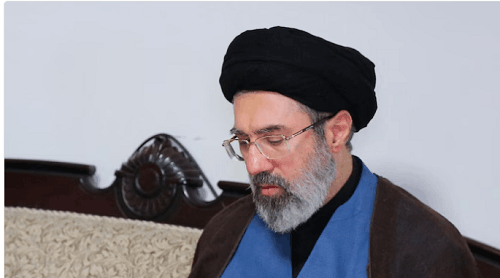
Who Is Mojtaba Khamenei?
Mojtaba Khamenei was born in 1969 in the city of Mashhad and is the second-oldest son of Ali Khamenei. Despite never holding a major public office, he has long been viewed as an influential figure behind the scenes in Iranian politics.
He reportedly served in Iran’s military during the Iran-Iraq War and later studied Islamic theology in Qom, one of the country’s most important religious centers. Over the years, Mojtaba developed strong ties with the Islamic Revolutionary Guard Corps (IRGC), a powerful military and political institution in Iran.
Many analysts believe these relationships played a key role in strengthening his position as a leading candidate for the country’s top post.
Controversy Over a Possible Dynastic Succession
The reported selection of Mojtaba Khamenei has sparked debate within Iran and abroad. Critics argue that handing power from father to son could resemble a hereditary system, something Iran’s 1979 revolution specifically aimed to eliminate when it overthrew the monarchy of the Shah.
Traditionally, Iran’s Supreme Leader is expected to be a highly respected religious authority. Some observers say Mojtaba lacks the highest clerical rank normally associated with the role. Nevertheless, supporters argue that his political experience and deep connections within the country’s security establishment make him a practical choice during a time of crisis.
Iran’s Political System and the Role of the Supreme Leader
The Supreme Leader is the most powerful figure in Iran’s political system. While the country also has a president and parliament, the Supreme Leader holds ultimate authority over the military, judiciary, and major state policies.
For nearly four decades, Ali Khamenei dominated Iran’s political landscape, shaping the country’s foreign policy and internal governance. His successor will now inherit enormous power at a time when Iran faces serious economic pressure, regional conflict, and domestic political tensions.
Regional and Global Implications
The reported leadership change comes amid rising tensions in the Middle East. Iran has been involved in escalating confrontations with Israel and the United States, including missile attacks and large-scale military strikes across the region.
If Mojtaba Khamenei assumes the role permanently, analysts expect Iran’s policies to remain strongly conservative and resistant to Western influence. His known ties with the Revolutionary Guard and reputation as a hardliner could shape Iran’s approach toward regional conflicts, nuclear negotiations, and relations with global powers.
At the same time, the leadership transition could also bring internal challenges. Some factions within Iran’s political and religious establishment may oppose a dynastic style succession, which could trigger debates over legitimacy and authority within the regime.
What Happens Next
Despite the widespread reports, the final confirmation of Mojtaba Khamenei as Supreme Leader may still depend on formal approval by Iran’s clerical leadership. The Assembly of Experts is expected to finalize the decision after internal consultations and security assessments.
If the reports are confirmed, Iran will enter a new era under Mojtaba Khamenei’s leadership. The transition will likely shape the country’s political direction for decades and could have major consequences for stability across the Middle East.

Satyakam is a seasoned professional content writer with over 15 years of experience in creating high-quality, research-driven content for digital platforms. He specialises in business, finance, banking, law, technology, and informational blogs.