
The Teslas and BYDs of the world already proved Electric Vehicles are going to stay for the long term. And there are obvious reasons such as reduced emissions, reduced fossil fuel dependency for the faster adoption of this technology. Across the globe nations are racing towards electrified transportation to reduce emissions and build sustainable transport systems. But to support this transformation, the education sector must evolve too. Future workforce must understand EV concepts like power train, propulsion motor, propulsion battery, regenerative braking, energy recovery etc.
This has made EV Labs essential in modern engineering institutes. These labs transform traditional learning by combining theoretical concepts with real-world skills preparing the workforce of the future.
Why existing labs are not enough
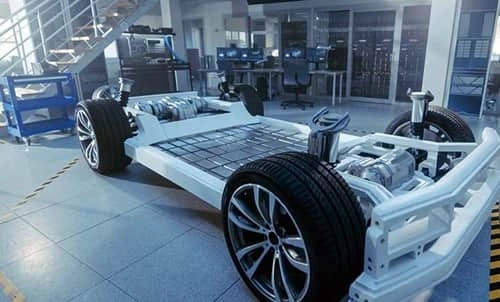
EV technology is inherently muti-disciplinary. It involves Electrical Engineering, Mechanical Engineering, Thermal Engineering, Materials Engineering, Chemical Engineering, Data Science and AI. The traditional engineering programs mostly focus on independent studies of motors, power electronics, batteries, materials, software but Electric Vehicles are complex systems combining all of these components together.
The electric vehicle laboratory fills this critical gap. They bring systems like batteries, converters, and traction motors into the learning environment, allowing students to visualize energy conversion, efficiency, and regenerative braking firsthand.This shift from textbook knowledge to applied learning helps students translate concepts to tangible outcomes.
What should an EV Lab be like
An EV Lab should enable hands-on experimentation with real electric vehicle systems. Students should be able to test different drive cycles, analyze torque-speed curves, temperature maps, study power electronics components and study how battery discharge affects vehicle range. These activities transform abstract classroom concepts into practical understanding.
Typical lab setups should be designed to cover three critical areas of electric vehicles:
- Battery Technology – Charging/Discharging behaviour, thermal characteristics, response of battery in changing environmental conditions, aging and degradation, Battery Management System,energy regeneration.
- Powertrain Technology – Interaction of battery with motor controller and motor, behaviour and control of Power Electronics converters (DC-DC, DC-AC and AC-DC), drivetrain simulations.
- EV Charging Infrastructure – Learners interact with DC Fast Charger, AC Slow chargers and on-board chargers along with communication infrastructure.
By integrating these three domains, students gain a comprehensive, real-world understanding of how electric vehicles operate, preparing them for careers in EV design, testing, and research.
Encouraging Innovation and Research
Beyond academic learning, EV Labs serve as research hubs where students and faculty can innovate. They can experiment with motor controller algorithms, BMS algorithms, charging/discharging algorithms and validate their solutions using such lab setups. Through controlled simulations, students explore topics such as vehicle-to-grid communication, motor drive optimization, and battery degradation analysis. Collaborative projects between academia and industry often originate in these labs, driving new patents and product prototypes.
Integrating with Industry 4.0 and Smart Mobility
The future of transportation lies in smart, connected, and data-driven systems. Electric vehicles are already incorporating IoT, Artificial Intelligence (AI), and Machine Learning (ML) for predictive control and maintenance.
Modern EV Labs are designed to reflect this shift. Students can use sensors, cloud data, and simulation software to analyze performance and predict faults.
These labs create awareness of Industry 4.0 technologies, equipping learners to work on intelligent vehicles and energy networks. This interdisciplinary exposure helps them develop a systems-level understanding—essential for next-generation engineers in both automotive and renewable energy sectors.
Promoting Sustainability Awareness
Sustainability is now a central theme in engineering education. Through EV Labs, students experience how technology supports cleaner transportation and energy efficiency.
They study:
- how electric vehicles reduce greenhouse emissions,
- how charging infrastructure integrates with renewables,
- and how regenerative braking saves energy.
Such learning builds environmental awareness and instills responsibility among engineers of the future.When students realize their projects can reduce carbon footprints or improve energy storage, sustainability becomes not just a subject—but a mindset.
Institutional Benefits of Establishing EV Labs
Setting up an Electric Vehicle Laboratory is more than a technological upgrade—it’s a strategic investment in the future of engineering education. Beyond enhancing student learning, EV labs provide long-term benefits that strengthen an institution’s academic and research ecosystem.
- Improved Academic Reputation: Skill-based programs offered through EV labs enhance institutional rankings and accreditation potential. By integrating hands-on learning with curriculum objectives, colleges demonstrate their commitment to industry-relevant education.
- Industry Collaboration: EV labs attract partnerships with automotive OEMs, startups, and research organizations. Such collaborations open opportunities for joint projects, internships, and knowledge exchange, ensuring students gain exposure to real-world challenges.
- Funding Opportunities: Institutions with EV labs are better positioned to secure grants and government support under programs promoting green mobility and renewable energy integration. These funds can be used to expand research initiatives and modernize lab infrastructure.
- Entrepreneurial Growth: EV labs encourage students to innovate, prototype, and test their ideas. This environment fosters entrepreneurship, enabling learners to develop real-world EV solutions and even launch startups within the sustainable mobility sector.
By establishing a fully equipped Electric Vehicle Laboratory, institutes not only enhance learning outcomes but also position themselves as leaders in sustainable engineering education, driving research, innovation, and industry engagement.
Supporting Advanced EV Education Through Laboratory Innovation
Advanced Electric Vehicle Laboratories play a crucial role in preparing students for the evolving EV industry. Modular and scalable lab setups allow learners to explore motor control validation, battery performance, drive cycle simulation, and regenerative energy analysis.
These systems replicate real-world EV operations, giving students practical insights into energy flow, efficiency, and system behavior. By integrating such labs into academic programs, institutions can provide hands-on learning that complements theoretical coursework, encourages experimentation, and fosters innovation.
For institutes interested in implementing comprehensive EV training systems, solutions like the Electric Vehicle Laboratory offer frameworks designed for universities, research centers, and skill development programs, helping bridge the gap between academic learning and industry needs.
Empowering a Future-Ready Workforce
According to industry forecasts, electric vehicles could represent more than 40% of global vehicle sales by 2030. This surge will demand engineers skilled in battery systems, motor drives, and charging infrastructure.Institutes with EV Labs are already preparing students for this opportunity.Graduates trained through these facilities can contribute to diverse sectors—automotive R&D, charging networks, smart grid integration, and battery recycling.
Such exposure makes them highly employable while supporting the country’s mission to build a sustainable and self-reliant electric mobility ecosystem.
Conclusion
The transition to electric vehicles signifies a significant change in engineering education. Institutions must add practical experience to theoretical instruction in order to prepare students for this changing industry.
This crucial link is provided by EV Labs, which enables students to investigate real-world systems, test batteries, drivetrains, and charging infrastructure, and gain a practical understanding of energy management. They promote creativity, problem-solving abilities, and knowledge of sustainability.
Institutions may provide students with useful skills, promote research, and facilitate industry collaboration by incorporating sophisticated Electric Vehicle Laboratory setups into their curricula. By doing this, engineering schools contribute to the development of a workforce capable of spearheading the shift to more sustainable, intelligent, and clean transportation.

Santosh Kumar is a Professional SEO and Blogger, With the help of this blog he is trying to share top 10 lists, facts, entertainment news from India and all around the world.