India and Poland are not enemies. In fact, they recently upgraded their relationship to a strategic partnership. Yet, in early 2025, a visible diplomatic tension surfaced between the two countries. The disagreement does not involve borders, trade wars, or military threats. It is political, sensitive, and rooted in security and foreign policy choices.
Here’s a clear look at what triggered the dispute and why it matters.
Background: Friendly Ties, But Different Worldviews
India and Poland have shared cordial relations for decades. Poland supports India in the EU on several trade and technology issues, while India sees Poland as a key European partner in manufacturing and defense.
The relationship gained momentum after Prime Minister Narendra Modi’s 2024 visit, when both sides spoke of long-term cooperation. That context makes the current friction more noticeable.
The Core Issue: India’s Concern Over Pakistan Links
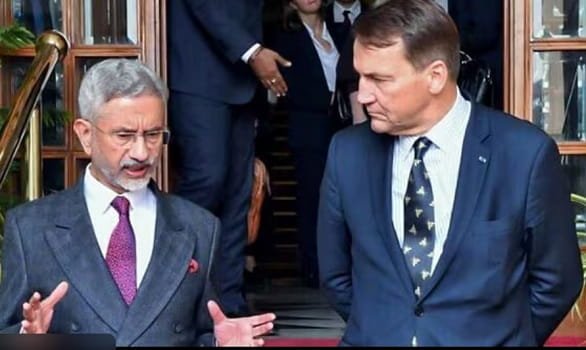
The tension surfaced during the visit of Poland’s foreign minister, Radosław Sikorski, to New Delhi. During official talks, India’s External Affairs Minister, S. Jaishankar, made an unusually blunt statement.
India expressed concern over Poland’s growing engagement with Pakistan. New Delhi believes that some international partnerships risk indirectly legitimizing Pakistan’s role in sponsoring cross-border terrorism. When Poland participated in joint statements and diplomatic engagements where Kashmir was referenced, India viewed it as interference in a strictly bilateral issue.
Jaishankar warned that countries should avoid actions that could “fuel terrorist infrastructure” in India’s neighborhood. The message was firm and deliberate.
Poland’s Position: Ukraine, Russia, and European Security
From Poland’s perspective, its foreign policy is shaped heavily by the Russia–Ukraine war. Warsaw is one of Ukraine’s strongest supporters and remains deeply wary of Moscow.
Poland has openly criticized India’s neutral stance on Russia, including continued trade and diplomatic engagement. During his India visit, Sikorski reiterated that Europe sees Russia as a direct security threat and urged caution in trusting Moscow.
While Poland acknowledged India’s concerns on terrorism, it did not back away from its broader positions on global security or its diplomatic outreach.
A Broader Clash: Selective Western Criticism
India also raised another issue during the talks: what it calls “selective targeting” by Western countries. New Delhi feels that nations like Poland criticize India’s foreign policy choices while ignoring similar actions by others.
From India’s view, strategic autonomy is non-negotiable. It will engage with Russia, Europe, the US, and the Global South based on its own interests. Poland, aligned closely with NATO and the EU consensus, sees this differently.
This gap in worldview lies at the heart of the disagreement.
Is This a Serious Diplomatic Crisis?
No. Despite the strong language, both sides continue to engage diplomatically. There were no expulsions, sanctions, or breakdowns in dialogue. Officials from both countries emphasized cooperation in trade, technology, and defense.
What makes this episode important is its tone. India chose to publicly articulate its concerns rather than keep them behind closed doors. That signals a more assertive Indian diplomacy, especially when it comes to terrorism and sovereignty.
What Happens Next?
The most likely outcome is quiet recalibration. Poland will remain an important EU partner for India, and India will continue to engage Poland on economic and strategic issues. However, New Delhi has clearly drawn a red line on Kashmir and Pakistan-related narratives.
This episode shows that even friendly nations can clash when regional security and global politics intersect. The relationship isn’t breaking—but it is being tested.

Satyakam is a seasoned professional content writer with over 15 years of experience in creating high-quality, research-driven content for digital platforms. He specialises in business, finance, banking, law, technology, and informational blogs.