
Apple is quietly preparing its next major shift in consumer technology. According to recent reports, the company is accelerating development on three new AI-powered wearable devices—smart glasses, a wearable pendant, and camera-equipped AirPods. This move signals a deeper push beyond phones and watches, toward AI that lives closer to the human body and works constantly in the background.
While none of these products are official yet, the direction is clear: Apple wants AI to become more personal, more contextual, and less dependent on screens.
Apple’s Changing Strategy Around AI
Apple has traditionally moved slower than rivals when it comes to new product categories. But when it commits, it tends to reshape the market. Over the past year, Apple has been rethinking how artificial intelligence fits into its ecosystem—not as a standalone chatbot, but as a layer that quietly enhances daily life.
Instead of focusing only on phones or laptops, Apple appears to be betting on wearables that see, hear, and understand the world alongside the user. These devices are designed to feed real-world context into AI systems, making responses more useful and timely.
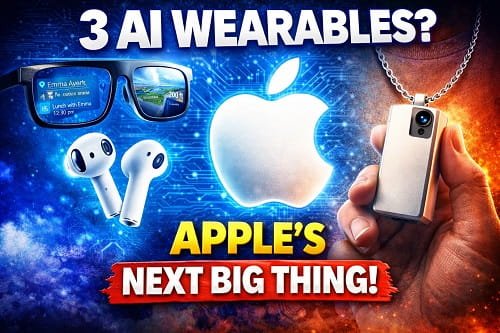
AI Smart Glasses: A Long-Term Vision
The most ambitious project among the three is Apple’s AI smart glasses. Unlike bulky headsets, these are expected to look closer to regular eyewear. Cameras and sensors would allow the glasses to understand surroundings—objects, text, locations—without the user pulling out a phone.
The goal isn’t full virtual reality. It’s subtle assistance. Directions that appear when walking. Instant translation of signs. Context-aware reminders. All powered by AI working in the background.
Apple has reportedly learned from earlier industry missteps. Instead of rushing, it’s prioritizing battery life, comfort, and privacy—three areas where consumer acceptance often fails.
The Wearable Pendant: AI Without a Screen
Perhaps the most unusual device in development is a wearable pendant. This small, clip-on or necklace-style device wouldn’t have a traditional screen. Instead, it would rely on voice, sensors, and AI processing connected to the iPhone.
The pendant’s role is simple: awareness. It could listen for commands, detect movement, understand location, and provide contextual input to Apple’s AI systems. Think of it as a constantly present assistant that doesn’t need to be held or looked at.
This concept reflects a broader shift in tech—moving away from screens and toward ambient computing, where technology fades into the background.
AirPods With Cameras: More Than Just Audio
Apple’s AirPods are already among the world’s most popular wearables. Adding cameras may sound strange at first, but it aligns with Apple’s broader AI goals.
With visual input, AirPods could help AI understand what the user is looking at. Combined with audio, this creates a richer picture of context. For example, the AI could assist with navigation, identify objects, or respond more accurately to spoken questions.
Privacy concerns are obvious here, and Apple is likely to emphasize on-device processing and strict controls. Historically, Apple has leaned heavily on privacy as a competitive advantage, and these devices would be no exception.
How Siri Fits Into This Ecosystem
Siri is expected to play a central role in all three devices. For years, Siri lagged behind competitors in perceived intelligence. These wearables may be part of Apple’s effort to reboot Siri as a truly context-aware assistant.
Instead of waiting for direct commands, Siri could act proactively—suggesting actions based on what the user sees, hears, or does. This represents a shift from reactive AI to anticipatory assistance.
Competition and Industry Pressure
Apple isn’t moving in isolation. Companies like Meta and several AI startups are already experimenting with smart glasses and AI wearables. The difference is Apple’s ecosystem advantage. These devices won’t exist on their own—they’ll connect seamlessly with iPhones, Apple Watches, and Macs.
That integration could be the deciding factor. Users may not need another gadget unless it works effortlessly with what they already own.
Challenges Apple Still Faces
Despite the excitement, major hurdles remain. Battery life is critical. Wearables must last all day without becoming bulky. AI accuracy must be high enough to feel helpful, not intrusive. And privacy concerns must be addressed clearly and convincingly.
There’s also the risk of consumer hesitation. Wearables that listen and see constantly can make people uncomfortable, regardless of safeguards.
Apple’s cautious pace suggests it understands these risks.
What This Means for Users
If Apple succeeds, these devices could change how people interact with technology. Less screen time. Fewer interruptions. More subtle assistance woven into daily routines.
Instead of asking AI for help, the help may arrive before the question is asked.
The Bigger Picture
Apple’s push into AI wearables isn’t about flashy gadgets. It’s about redefining how AI exists in everyday life—quiet, contextual, and always present.
Whether these devices launch next year or later, they point to a future where technology doesn’t demand attention. It simply understands.
And if Apple gets it right, this could be its most important shift since the smartphone era.

Satyakam is a seasoned professional content writer with over 15 years of experience in creating high-quality, research-driven content for digital platforms. He specialises in business, finance, banking, law, technology, and informational blogs.