Everyone seems to be talking about the Seven Sisters and the Chicken’s Neck these days. Open YouTube, scroll through news debates, or watch geopolitical explainers, and you will find dozens of videos warning about India’s Northeast, the Siliguri Corridor, China, Bangladesh, and internal unrest. The tone is often dramatic — some claim the Northeast could be cut off overnight, others predict an inevitable conflict. But beyond the noise, a serious question remains: what exactly is the Seven Sisters–Chicken’s Neck issue, why has it become so prominent now, and what can realistically be done about it? This debate is not driven by fear alone. It reflects genuine strategic, internal security, and geopolitical pressures converging at one sensitive point in India’s geography. Understanding the real problem — without exaggeration — is essential before talking about threats, timelines, or solutions.
India’s internal security debate often treats problems as separate files — insurgency in the Northeast, border tensions with China, instability in neighbouring countries, or infrastructure vulnerabilities in eastern India. In reality, these issues converge at one strategic fault line. That fault line lies where the Seven Sisters meet the Siliguri Corridor, creating what defence planners increasingly describe as a two-front internal security challenge.
This is not a conventional two-front war scenario. It is more complex and more subtle. One front operates inside the Northeast through social, ethnic, and governance stress. The other operates around it — through pressure on the narrow corridor that connects the region to the Indian mainland. When these two fronts activate together, the risk is not immediate military defeat, but gradual strategic erosion.
What Are the Seven Sisters?
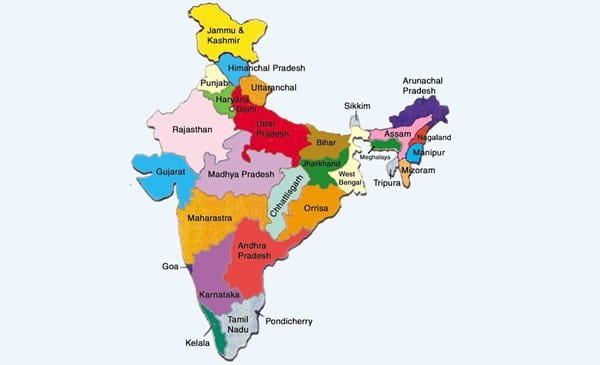
The Seven Sisters refers to the seven northeastern states of India — Assam, Arunachal Pradesh, Meghalaya, Manipur, Mizoram, Nagaland, and Tripura. Geographically clustered but culturally diverse, this region is connected to the rest of India by a narrow land bridge known as the Siliguri Corridor. The Seven Sisters share long international borders with China, Myanmar, Bangladesh, Bhutan, and Nepal, giving the region immense strategic value. Ethnic diversity, difficult terrain, and historical insurgencies have shaped its security environment, making stability here central to India’s unity and eastern defence posture.
The Siliguri Corridor: India’s Strategic Lifeline
The Siliguri Corridor, often called the Chicken’s Neck, runs through northern West Bengal. In 2026 assessments, its narrowest stretches measure 20–22 km — a distance that modern armour and artillery can influence from border to border.
Through this corridor pass:
- All rail and road links to the Northeast
- Fuel pipelines and essential goods
- Power transmission lines and fibre-optic cables
- Military reinforcements for India’s Eastern Command
This makes the corridor a classic strategic choke point. Any disruption here multiplies pressure inside the Seven Sisters.
Why This Is a Two-Front Internal Security Challenge
The challenge is “two-front” because it operates simultaneously on:
- Internal instability within the Seven Sisters
- External and hybrid pressure on the Siliguri Corridor
These two fronts reinforce each other. Internal unrest weakens corridor security. Corridor disruption intensifies stress inside the Northeast. This feedback loop is what makes the situation uniquely dangerous.
Front One: Internal Security Stress in the Seven Sisters
Ethnic Complexity and Historical Insurgency
The Northeast is one of the most ethnically diverse regions in Asia. Borders drawn during colonial times cut across communities rather than cultures. Naga, Kuki, Mizo, Chin, and other groups extend across India, Myanmar, and Bangladesh.
While decades of counter-insurgency and peace accords have reduced violence, insurgent ecosystems were never fully dismantled. Arms routes, extortion networks, and ideological linkages still exist in dormant form. When governance weakens or external pressure rises, these networks can reactivate quickly.
Governance Gaps and Perception
Despite infrastructure growth, many communities continue to feel:
- Politically marginalised
- Economically left behind
- Culturally misunderstood
From a security perspective, perception is as critical as reality. A belief that the centre is distant or distracted can be exploited during crises.
Spillover From Neighbouring Conflicts
Instability in Myanmar has pushed refugees, weapons, and criminal networks toward India’s eastern borders. This strains local administration and policing, creating security fatigue — especially in border states like Manipur and Mizoram.
Front Two: Pressure on the Siliguri Corridor
The Siliguri Corridor is narrow, but it is also densely loaded with critical infrastructure.
The “Soft Choke” Scenario
Modern conflict does not begin with armoured columns. It begins with disruption:
- Sabotage of rail lines near New Jalpaiguri, the Northeast’s rail hub
- Cyber attacks on signalling and power systems
- Communal or political unrest in North Bengal districts
- Border management breakdowns in Bangladesh
Even short-term disruption can paralyse movement to the Northeast.
The “Devil’s Triangle” Factor (2025–26)
Strategic analysts increasingly refer to a “Devil’s Triangle” around the corridor:
- Damak (Nepal): Chinese-backed industrial zones with dual-use concerns
- Lalmonirhat (Bangladesh): A former WWII airbase, about 135 km from Siliguri, discussed for revival with Chinese technical assistance
- Gelephu (Bhutan): Massive infrastructure expansion watched closely by Beijing
Individually manageable, together they create strategic pressure geometry around the corridor.
External Actors and Strategic Opportunism
China’s Calculus
China does not need to invade the corridor to benefit from it. Its objectives are subtler:
- Tie down Indian forces defensively
- Exploit internal instability
- Keep escalation options open without triggering war
This is why areas like Doklam mattered. Control of angles and access points matters more than territory.
Neighbourhood Stability as a Security Variable
Neither Bangladesh nor Nepal needs to be hostile for risk to emerge. Political instability, administrative paralysis, or policy drift alone can disrupt transit and coordination — enough to strain India’s internal security.
India’s Evolving Response (2025–26)
India has begun treating the Northeast and the Siliguri Corridor as one strategic theatre.
Military Posture Shift: From Deterrence to Dominance
By late 2025, new garrisons were established at:
- Bamuni (Dhubri, Assam)
- Kishanganj (Bihar)
- Chopra (North Bengal)
These bases are designed for rapid counter-action, infrastructure protection, and corridor dominance.
Air and Missile Coverage
Deployment of BrahMos and S-400 systems under the Trishakti Corps, along with upgraded Hasimara Airbase hosting Rafale squadrons, ensures strong deterrence against overt threats.
Reducing Overdependence
Projects like the Kaladan Multimodal Transit and proposed rail links via eastern India aim to diversify access routes. These are supplements, not replacements, but they raise resilience.
Internal Security Integration
Closer coordination between the Army, BSF, and state police focuses on preventing internal unrest from merging with external pressure.
What Happens If Both Fronts Heat Up Together?
India has prepared for this scenario.
Phase One: Stockpile Stability (0–45 days)
The Northeast now holds theatre-level reserves of fuel, ammunition, and food sufficient for 30–45 days of high-intensity conflict without mainland support.
Militarily, India can hold its ground.
Phase Two: Strategic Stress (Beyond 45 days)
Beyond this window:
- Logistics become fragile
- Economic pressure mounts
- Governance strains increase
- Civilian morale becomes a factor
At this stage, the greatest threat is psychological alienation, not battlefield defeat.
The Psychological Dimension
The most underestimated factor in internal security is belief.
If citizens in the Northeast begin to feel:
- Isolated
- Uncertain about support
- Disconnected from national stability
then even the strongest military posture cannot fully compensate. Modern conflicts are as much about confidence as they are about firepower.
Final Assessment
The Seven Sisters and the Siliguri Corridor together form India’s most complex internal security challenge in 2026.
Not because India lacks capability — but because:
- Geography is unforgiving
- Diversity requires constant political sensitivity
- External actors exploit hesitation, not weakness
India will not lose the Northeast by losing a war. It risks losing stability by allowing internal stress and external pressure to converge.
In strategic terms, the Siliguri Corridor is not just a passage of land. It is a test of India’s cohesion under pressure — and the Seven Sisters are at the heart of that test.

Santosh Kumar is a Professional SEO and Blogger, With the help of this blog he is trying to share top 10 lists, facts, entertainment news from India and all around the world.