In India’s strategic imagination, no stretch of land carries more weight than the Chicken’s Neck — officially known as the Siliguri Corridor. It is a narrow land bridge that binds the Indian mainland to the Seven Sisters of the Northeast. If this corridor is disrupted, the impact is not symbolic. It is immediate, cascading, and deeply destabilising.
As of 2026, strategic assessments increasingly describe parts of the corridor as being only 20–22 km wide in specific sections of West Bengal. To put that in military terms, this is roughly the distance of a modern tank’s effective engagement envelope from border to border. Geography here is not passive. It is an active vulnerability.
The question is no longer academic: If the Chicken’s Neck is choked physically, politically, or through hybrid means what truly happens to the Seven Sisters?
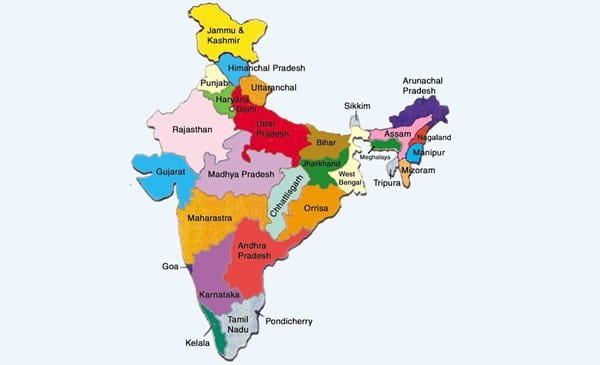
The Corridor: Geography That Decides Strategy
The Siliguri Corridor sits between four countries:
- Nepal to the west
- Bangladesh to the south
- Bhutan to the north
- China (Tibet region) beyond Bhutan
Through this narrow strip pass:
- All rail links to the Northeast
- National highways and fuel pipelines
- Fibre-optic cables and power transmission lines
- Military reinforcements and heavy logistics
On the other side lie:
- Assam
- Arunachal Pradesh
- Meghalaya
- Manipur
- Mizoram
- Nagaland
- Tripura
This is why defence planners treat the corridor not as a border issue, but as a national survival artery.
The “Devil’s Triangle”: New Pressure Geometry (2025–26)
In recent strategic literature, the corridor is now discussed alongside what analysts call the “Devil’s Triangle” — three external pressure points that together squeeze India’s options.
1. Damak (Nepal)
Damak, close to India’s border, has seen Chinese-backed industrial parks whose infrastructure raises dual-use concerns. Warehousing, wide roads, and power capacity far exceed civilian needs. In a crisis, such spaces can shift roles quickly.
2. Lalmonirhat (Bangladesh)
Lalmonirhat hosts a former WWII airbase, barely 135 km from the Siliguri Corridor. Reports in late 2025 flagged discussions on its revival with Chinese technical assistance, officially for civilian surveillance and training. Militarily, the implications are obvious.
3. Gelephu (Bhutan)
Gelephu is undergoing massive infrastructure expansion. While Bhutan remains India’s closest partner, China’s persistent interest in southern Bhutanese access routes adds strategic anxiety, especially given past pressure around Doklam.
Individually, these points are manageable. Together, they form a triangular pressure zone around the corridor.
From Deterrence to Dominance: India’s Posture Shift
India’s response has evolved. By late 2025, the Indian Army moved from a deterrence-heavy posture to one focused on area dominance.
Three new forward-oriented garrisons were established:
- Bamuni (Dhubri, Assam)
- Kishanganj (Bihar)
- Chopra (North Bengal, West Bengal)
These are not static defensive bases. They are designed for:
- Rapid counter-offensive action
- Protection of rail and road hubs
- Immediate response to sabotage or infiltration
This reflects a doctrinal shift: the corridor must not just be defended; it must be controlled.
How a Choke Happens Without Tanks
A modern choke rarely begins with armoured columns.
1. Hybrid Sabotage
Security agencies in 2026 are closely watching demographic and radicalisation patterns in Uttar Dinajpur and Darjeeling districts. The concern is “soft choke” tactics:
- Sabotage of rail lines near New Jalpaiguri junction
- Disruption of power and telecom infrastructure
- Coordinated unrest timed with external pressure
If rail traffic halts even for days, the corridor’s utility collapses.
2. Cyber and Information Warfare
Rail signalling, fuel dispatch systems, and air traffic coordination are all digitised. Cyber disruption here creates paralysis without visible aggression.
3. Political and Diplomatic Pressure
Instability in Bangladesh or Nepal does not need hostility to hurt India. Border management breakdown alone can slow transit enough to create strategic stress.
What Actually Happens to the Seven Sisters?
If the corridor were choked today, the immediate impact would not be collapse. India has prepared for this.
Phase One: Stockpile Survival (0–45 days)
India has built theatre-level reserves across the Northeast:
- Fuel
- Ammunition
- Food and medical supplies
These reserves are assessed to last 30–45 days of high-intensity conflict without mainland support.
Militarily, India can hold.
Phase Two: Strategic Strain (Beyond 45 days)
After this window, the threat shifts.
- Logistics Become Fragile
Air supply cannot replace bulk fuel, artillery shells, or armour movement. - Economic Pressure Builds
Fuel shortages, price spikes, and halted construction hit civilian morale. - Administrative Fatigue
Rotations slow. Governance weakens. Disaster response capacity drops. - Psychological Alienation Emerges
This is the real danger. If people feel isolated, trust erodes. And once trust erodes, integration weakens.
No enemy needs to conquer territory at this stage. Confidence becomes the battlefield.
Why China Watches the Corridor So Closely
From Beijing’s perspective, the Siliguri Corridor is strategic leverage.
- It offsets India’s naval advantage in the Indian Ocean
- It complicates India’s two-front war planning
- It ties down Indian forces far from China’s eastern seaboard
China does not need to act unless timing is favourable — during:
- Internal unrest in the Northeast
- Instability in neighbouring states
- Indian military distraction elsewhere
This is why Doklam mattered. It was never about that plateau alone. It was about angles and access.
Vulnerability vs Countermeasure (2026 Snapshot)
| Strategic Threat | Indian Countermeasure (2026) |
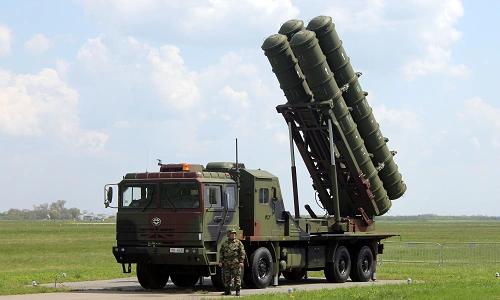
| Physical Blockade | Deployment of S-400 and BrahMos systems under Trishakti Corps |
| Logistical Severance | Kaladan Multimodal Project and Hili–Mahendraganj rail proposal |
| Airspace Denial | Upgraded Hasimara Airbase with Rafale squadrons |
| Internal Sabotage | Enhanced Army–BSF coordination via new garrisons |
These measures do not eliminate risk, but they raise the cost of coercion.
Final Assessment: What Is Really at Stake
If the Chicken’s Neck is choked, the Seven Sisters do not fall militarily overnight. India has prepared for that scenario. The deeper danger lies elsewhere.
The real threat is:
- Prolonged uncertainty
- Psychological isolation
- Political fragmentation
Modern wars are not decided only by territory. They are decided by belief — belief in connection, in support, in permanence.
The Siliguri Corridor is not just a strip of land.
It is a test of India’s cohesion under pressure.
And in a region where 20 kilometers can decide strategy, unity is the strongest defence India possesses.

Santosh Kumar is a Professional SEO and Blogger, With the help of this blog he is trying to share top 10 lists, facts, entertainment news from India and all around the world.