For many Indian families, playgroup is a child’s first regular experience outside home. Toddlers meet peers, follow a gentle routine, and learn to trust new adults. A strong playgroup does not rush academics; it builds comfort with separation, group life, and small self-help skills. With these in place, children enter preschool calmer, more confident, and ready to participate.
What playgroup is (and what it is not)
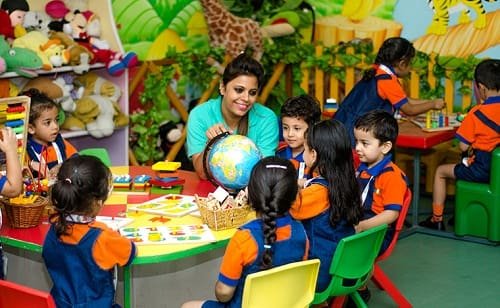
Playgroup is a play-based programme for children roughly between 18 months and 3 years. It should be warm, safe, and flexible, with activities that match a toddler’s attention span. Learning comes through movement, conversation, sensory play, stories, and music.
It is not a smaller version of preschool with long table work. If a programme is worksheet-heavy or focused on constant “performance”, it can create pressure and reduce a child’s joy in learning.
Separation becomes easier, one day at a time
Preschool success often depends on how well a child can separate from a parent or grandparent. In a playgroup, separations are shorter and handled gently. Teachers build a predictable goodbye routine, offer comfort, and guide the child into an inviting activity.
With steady support, children learn three reassuring truths: caregivers return, teachers can be trusted, and new spaces can feel familiar. Once that security is built, the child is more willing to explore, speak, and participate.
Social skills that make classrooms smoother
Toddlers are still learning how to share space. In a playgroup, children practise being part of a group without being pushed to share before they are ready. They begin to wait, take turns, and notice what others are doing. They also learn how to enter play, follow another child’s idea, and handle small conflicts.
These skills reduce stress in preschool because the child can join peer activities, cope with minor disappointments, and recover after a disagreement.
Routines that build self-control
Playgroup introduces structure in a toddler-friendly way. Repeated patterns help children predict what comes next and manage transitions. A typical session might include free play, a short circle time, snack, outdoor movement, and a story.
Many children gradually learn habits like these:
- putting toys back into a basket
- washing hands before snack
- sitting for a brief group activity
- following one-step directions (“come here”, “keep the blocks on the mat”)
- asking for help with words or gestures
By the time preschool starts, these habits make it easier to listen, cooperate, and shift from one activity to another.
Language grows through real interaction
In the early years, language develops through responsive conversation, songs, rhymes, and shared books. In a good playgroup, educators narrate actions (“you are pouring water”), label feelings (“you look upset”), and pause so the child can respond.
Children pick up classroom language: greeting others, answering simple questions, requesting a turn, and describing what they are doing. In many Indian homes, children hear more than one language. A supportive playgroup respects the home language while building comfort with English used in many preschools.
Independence without pressure
Preschools expect children to manage small tasks: carrying a water bottle, opening a lunch box with help, or following a toilet routine with support. Playgroup introduces independence in small steps. Teachers encourage children to try first, then assist.
This builds confidence because the child experiences success repeatedly. It also builds persistence: when a toy does not work, or a puzzle is tricky, the child learns to try again.
Motor skills that support later learning
Movement is learning for toddlers. Climbing, balancing, jumping, and dancing improve coordination and body control, which support sitting posture and stamina in preschool. Fine motor play – playdough, chunky crayons, simple puzzles – prepares hands for drawing and early writing.
Emotional skills: handling big feelings
Preschool classrooms move quickly. A child may need to wait, accept a change, or handle disappointment when a friend says “no”. In playgroup, educators name emotions, model calm responses, and guide children towards coping tools such as deep breaths, a quiet corner, or asking for help.
Parent communication is another advantage. Playgroups often share quick updates on sleep cues, snack habits, and behaviour, so families can respond early. When home routines (mealtimes, screens, bedtime) become steadier, children arrive less tired and more settled. This alignment between home and school makes the jump to preschool smoother for everyone, including grandparents who are caregivers.
Choosing a playgroup that truly prepares children
During a visit, watch for warm teacher-child interaction, safe and clean spaces, and materials that invite open-ended play. Ask how the team handles biting, separation anxiety, and toilet support. Many parents begin by exploring preschools in Bangalore and then shortlist centres that run toddler programmes with trained educators and clear play-based planning.
The move into preschool feels familiar
Preschool usually means longer hours, bigger groups, and more structured group time. A child who has attended playgroup already understands classroom cues: joining a circle, listening to a story, and transitioning when the teacher signals “clean-up”.
When families later compare options for a preschool in Mumbai, they often find that playgroup children settle quicker, not because they “know academics”, but because they can separate, participate, and communicate needs.
Preschool success is confidence, not early academics
The biggest gift of the playgroup is a positive attitude towards learning. A child who feels safe with new adults, enjoys group play, and trusts routines walks into preschool with confidence. That confidence supports curiosity, friendships, and steady progress.

Santosh Kumar is a Professional SEO and Blogger, With the help of this blog he is trying to share top 10 lists, facts, entertainment news from India and all around the world.